
Dancing Swans
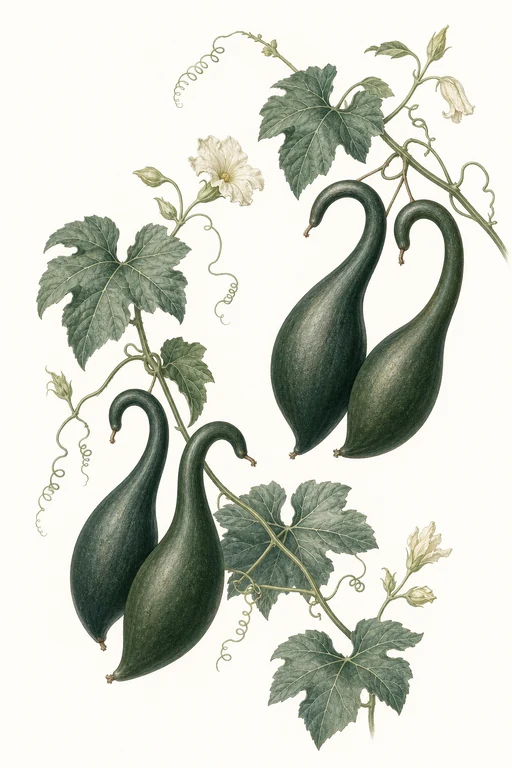
A graceful, swan-like silhouette rises on vigorous vines—Dancing Swans gourds mature into elegant, sculptural forms with a satin skin that catches the light.
The flesh is tender and mild, offering a clean, versatile flavor that shines in hearty uses and preserves, while the firm, decorative shell lends itself beautifully to drying and craftwork. Grow for both the garden’s drama and the pantry’s promise, with fruits that feel as special as they look.
Light: Full SunMaturity: 110 DaysHabit: Vine
Planting schedules and alerts are optimized for Columbus (Zone 6b).
Crop Dates
| Milestone | Date |
|---|---|
| Start Indoors | May 9th |
| Last Frost | Apr 25th |
| Transplant / Sow Outdoors | May 23rd |
| Harvest Begins | Sep 10th |
| Harvest Ends | Oct 16th |
Crop Details
| Trait | Value |
|---|---|
| Days to Maturity | 110 |
| Sun Requirements | Full Sun |
| Growth Habit | Vine |
| Support Needed | Trellis |
| Planting Depth | Normal |
| Germination Temp (°F) | 75 |
| Min Soil Temp (°F) | 65 |
| Min Night Temp (°F) | 55 |
| Harden Off (days) | 12 |
Culinary Notes

Chef's Note
Dancing Swans may be grown for its sculptural silhouette, but the eating part is the mild, tender flesh—ideal when you want a gourd that softens gracefully and absorbs savory partners. Slice it, roast or braise it, then let garlic/ginger and salty-sour elements carry the flavor so it doesn’t drift into blandness.

Best Uses
- quick sauté or stir-fry where you want soft-center texture
- roasted cubes (brown edges, tender interior)
- stews and braises that benefit from a neutral, soak-up personality
- pickling or pantry preserves to keep the flesh crisp-tender

Flavor Profile

Frequently Asked Questions
What pest or disease commonly affects Lagenaria siceraria (bottle gourd), and how can I prevent it?
How often should I water Lagenaria siceraria during its main growing phase (vines and fruit development)?
How do I tell when Lagenaria siceraria (bottle gourd) is ready to harvest?
Sowing Tips

Transplant Conditions
Wait until soil reaches 65°F and nights stay above 55°F before moving outdoors. Harden off for 12 days first.

Direct Sow Preferred
Sensitive roots — does not transplant well. If starting indoors, use biodegradable pots and disturb roots as little as possible when moving outdoors.
Expert Note

Grow in full sun with warm soil and give the vines plenty of space so the decorative shells mature fully and harden before harvest.