
Dancing With Smurfs
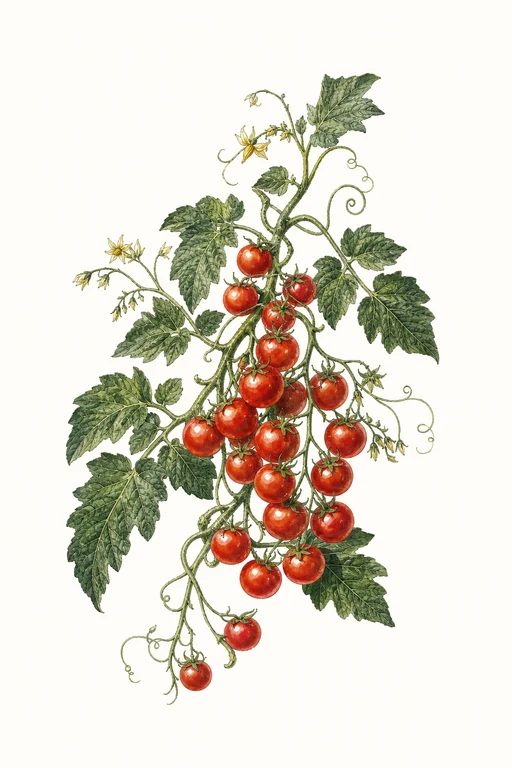
Bursting with a sweet, candy-bright flavor and a glossy, pop-in-your-mouth bite, Dancing With Smurfs cherry tomatoes hang in cheerful clusters like tiny lanterns.
The fruit is small and perfectly round, with a smooth, taut skin and a juicy, aromatic interior that shines whether you’re savoring them straight from the vine or letting their brightness lift fresh salads and vibrant sauces. A fast 60-day performer, it’s an easy, high-yield choice for gardeners who want abundant color and lively taste all season long.
Light: Full SunMaturity: 60 DaysHabit: Indeterminate
Crop Dates : 13a
| Milestone | Date |
|---|---|
| Climate | Frost-Free Climate |
| Growing Approach | Continuous Production |
Crop Details
| Trait | Value |
|---|---|
| Days to Maturity | 60 |
| Sun Requirements | Full Sun |
| Growth Habit | Indeterminate |
| Support Needed | Stake |
| Planting Depth | Deep |
| Germination Temp (°F) | 75 |
| Min Soil Temp (°F) | 60 |
| Min Night Temp (°F) | 50 |
| Harden Off (days) | 10 |
Culinary Notes

Chef's Note
A small-fruited tomato that earns its keep by staying snappy: the glossy skin holds together and the interior bursts with real, candy-bright flavor. Use it hot-and-fast (blister, pickle, or reduce briefly) so it doesn’t collapse into softness the way many larger tomatoes do.

Best Uses
- quick blistering in a hot pan so the skins wrinkle without turning to mush
- fast pickling for sweet-tart snacking and salad crunch
- vine-to-bowl eating—toss with flaky salt and olive oil to preserve the snap
- burst-friendly sauces and spoonable salsa that stay lively, not heavy

Flavor Profile

Kitchen Pairings
Frequently Asked Questions
What pest or disease is most common on Solanum lycopersicum (tomato) and how can I manage it?
How often should I water Solanum lycopersicum during the main growing phase to prevent problems?
How do I tell when Solanum lycopersicum is ready to harvest?
Sowing Tips

Transplant Conditions
Wait until soil reaches 60°F and nights stay above 50°F before moving outdoors. Harden off for 10 days first.
Expert Note

Start seeds in warm soil, transplant only after nights stay reliably above ~50°F and soil reaches ~60°F, and keep plants evenly moist to prevent blossom-end issues as fruit clusters set.