
De Milpa
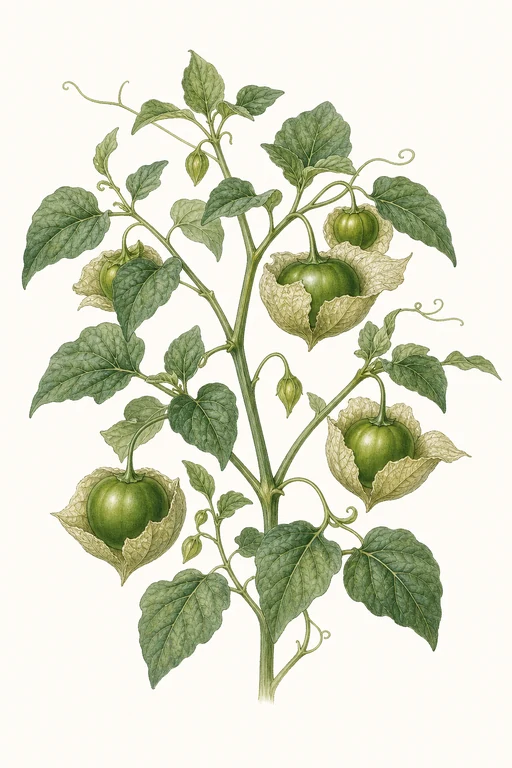
Sunlit, tangy-sweet green fruit fills the lantern-like husks with a vivid, citrusy snap—De Milpa tomatillos are prized for their bright flavor and firm, juicy texture.
At maturity, the smooth skins hold their shape beautifully, making them ideal for bold salsas and vibrant sauces, with a lively character that also shines when roasted or pickled for a zingy bite.
Light: Full SunMaturity: 75 DaysHabit: Indeterminate
Planting schedules and alerts are optimized for Columbus (Zone 6b).
Crop Dates
| Milestone | Date |
|---|---|
| Start Indoors | Mar 7th |
| Last Frost | Apr 25th |
| Transplant / Sow Outdoors | Jun 13th |
| Harvest Begins | Aug 27th |
| Harvest Ends | Oct 16th |
Crop Details
| Trait | Value |
|---|---|
| Days to Maturity | 75 |
| Sun Requirements | Full Sun |
| Growth Habit | Indeterminate |
| Support Needed | Stake |
| Planting Depth | Normal |
| Germination Temp (°F) | 75 |
| Min Soil Temp (°F) | 60 |
| Min Night Temp (°F) | 50 |
| Harden Off (days) | 8 |
Culinary Notes

Chef's Note
De Milpa tomatillos bring a high-acid, citrusy snap plus a firm juice stream, so your salsa verde tastes lively instead of heavy or cooked-down. The smooth skin and meaty interior hold up under roasting, giving you saucy brightness without turning grainy.

Best Uses
- blitzed salsa verde with smoky char for a bright, crunchy finish
- roasted tomatillo sauce that reduces into a glossy, tart coating
- quick pickling for a sharp, clean zing
- stewing into braises where the fruit keeps its shape and doesn’t go mealy

Flavor Profile

Frequently Asked Questions
What pest or disease most commonly affects Physalis philadelphica (de milpa), and what should I do first?
How often should I water Physalis philadelphica during its 60–75 day main growing phase?
How can I tell when Physalis philadelphica (de milpa) is ready to harvest?
Sowing Tips

Transplant Conditions
Wait until soil reaches 60°F and nights stay above 50°F before moving outdoors. Harden off for 8 days first.
Expert Note

Start tomatillo indoors early but transplant only once night temperatures stay reliably warm and the soil is near 60°F+ to prevent early stunting.