
Dinosaur
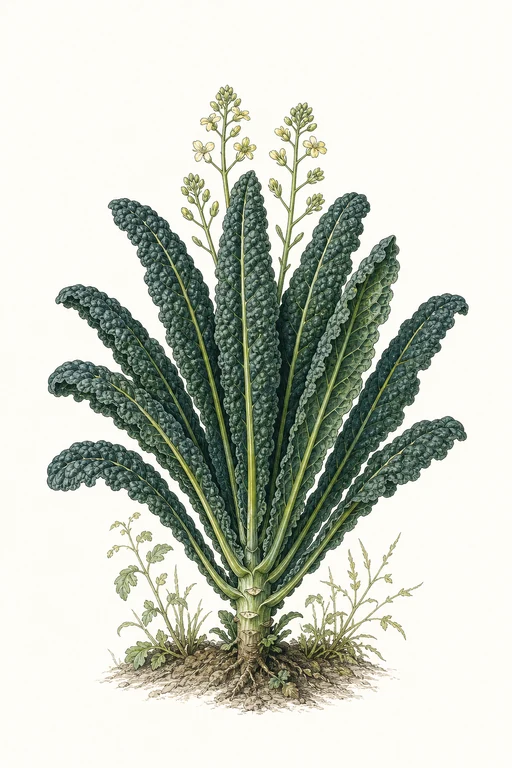
Feel the bold, dinosaur-like presence of ‘Dinosaur’ kale—deeply textured leaves that unfurl with a crisp, hearty bite and a rich, savory aroma.
Expect a sturdy, upright plant with thick, blue-green foliage that holds its character beautifully through cool weather, making it a standout for bold greens lovers. ‘Dinosaur’ is ideal for robust fresh salads and for turning into flavorful greens in sauces and sautés, delivering dependable color and substance from garden to plate.
Light: Full SunMaturity: 55 DaysHabit: Rosette
Planting schedules and alerts are optimized for Columbus (Zone 6b).
Crop Dates
| Milestone | Date |
|---|---|
| Start Indoors | Mar 28th |
| Last Frost | Apr 25th |
| Transplant / Sow Outdoors | Apr 18th |
| Harvest Begins | Jun 12th |
| Harvest Ends | Oct 16th |
Crop Details
| Trait | Value |
|---|---|
| Days to Maturity | 55 |
| Sun Requirements | Full Sun |
| Growth Habit | Rosette |
| Support Needed | None |
| Planting Depth | Normal |
| Germination Temp (°F) | 45 |
| Min Soil Temp (°F) | 40 |
| Min Night Temp (°F) | 35 |
| Harden Off (days) | 6 |
Culinary Notes

Chef's Note
Dinosaur kale is built for chew—thick ribs and deeply textured leaves stay firm under a quick sauté, so you’re not stuck with limp greens. Use it raw when dressed aggressively (acid + fat) or cook it long enough to soften the bitterness while keeping a satisfying bite.

Best Uses
- shredded raw salad where you want structure against vinaigrette
- sautéed greens with a quick glossy finish (olive oil or butter)
- massaged kale for a salad base that still crunches
- thickened kale-in sauces or soups where it keeps body

Flavor Profile

Kitchen Pairings
Frequently Asked Questions
What’s the most common pest or disease on Brassica oleracea var. viridis (dinosaurs/lacinato kale), and how can I prevent it?
How often should I water dinosaur kale during the main growing phase?
How do I know when dinosaur kale is ready to harvest?
Sowing Tips

Transplant Conditions
Wait until soil reaches 40°F and nights stay above 35°F before moving outdoors. Harden off for 6 days first.
Expert Note

Start early for tender leaves, and keep the soil consistently moist—stress and heat can make kale tougher or more bitter.