
Dipper Gourd
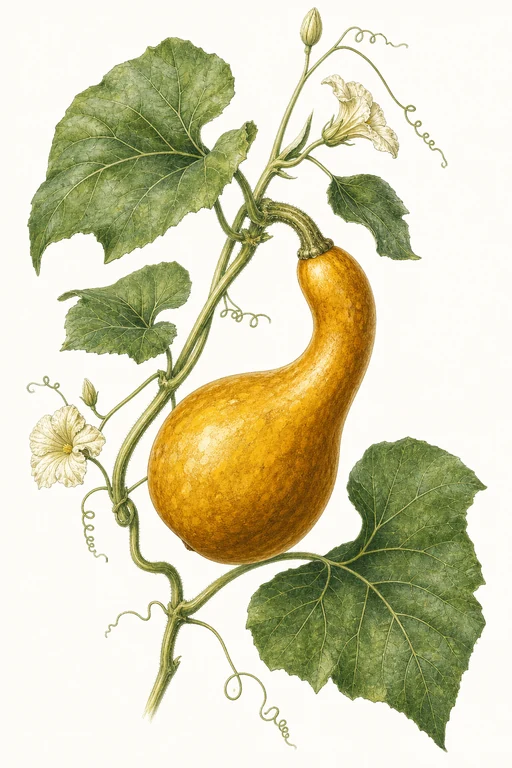
Sink your senses into Dipper Gourd’s rich, honeyed aroma and the satisfying heft of its mature fruit—an elegant, dipper-shaped gourd with a smooth, satin skin that deepens to a warm, sunlit tone as it cures.
The flesh is firm and pleasantly aromatic, making it a standout for crafting and preserving, while the bold form is equally at home as a centerpiece gourd. Grow one for its distinctive silhouette and the gratifying, long-season rhythm of a vine that keeps rewarding you through the 120-day journey to maturity.
Light: Full SunMaturity: 120 DaysHabit: Vine
Planting schedules and alerts are optimized for Columbus (Zone 6b).
Crop Dates
| Milestone | Date |
|---|---|
| Start Indoors | Apr 18th |
| Last Frost | Apr 25th |
| Transplant / Sow Outdoors | May 2nd |
| Harvest Begins | Aug 30th |
| Harvest Ends | Oct 16th |
Crop Details
| Trait | Value |
|---|---|
| Days to Maturity | 120 |
| Sun Requirements | Full Sun |
| Growth Habit | Vine |
| Support Needed | Trellis |
| Planting Depth | Normal |
| Germination Temp (°F) | 75 |
| Min Soil Temp (°F) | 65 |
| Min Night Temp (°F) | 55 |
| Harden Off (days) | 12 |
Culinary Notes

Chef's Note
Dipper Gourd’s mature flesh cooks up firm and aromatic—exactly the kind of gourd that won’t slump into watery mush in a pan. It’s built for high-heat browning, brine, and long reductions where that honeyed, slightly nutty perfume can concentrate.

Best Uses
- diced sauté/roast to caramelize edges for dips and bowls
- pickling or relishes that benefit from the flesh’s firm bite
- slow braises where you want the cubes to stay intact
- cooked-in preserves and syrups that spotlight the honeyed perfume

Flavor Profile

Frequently Asked Questions
What are common problems for Lagenaria siceraria (dipper gourd), and how do I manage them?
How often should I water Lagenaria siceraria during its main growing phase?
How can I tell when Lagenaria siceraria is ready to harvest?
Sowing Tips

Transplant Conditions
Wait until soil reaches 65°F and nights stay above 55°F before moving outdoors. Harden off for 12 days first.

Direct Sow Preferred
Sensitive roots — does not transplant well. If starting indoors, use biodegradable pots and disturb roots as little as possible when moving outdoors.
Expert Note

Because gourd roots resent disturbance, transplant only after the soil is truly warm and handle seedlings by the root ball to keep them from stalling.