
Doone Valley
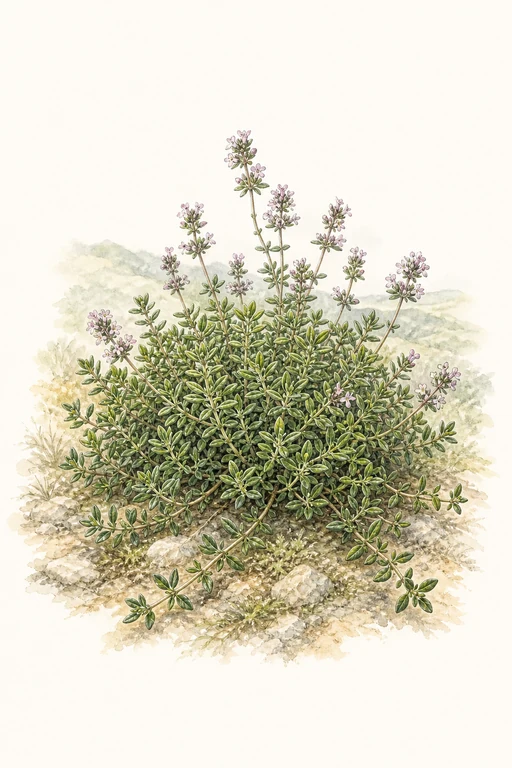
A bright, lemony perfume rises from every leaf of Doone Valley Lemon Thyme—zesty, aromatic, and unmistakably fresh.
The foliage is fine-textured and evergreen, with a low, tidy habit that forms a fragrant mat of small, gray-green leaves and tender tips. Grow it for bold flavor in herb-forward dishes, where its sunny character shines in roasts, marinades, sauces, and pickles, as well as for sprinkling over fresh salads and vegetables.
Light: Full SunMaturity: 60 DaysHabit: Upright
Planting schedules and alerts are optimized for Columbus (Zone 6b).
Crop Dates
| Milestone | Date |
|---|---|
| Start Indoors | Mar 28th |
| Last Frost | Apr 25th |
| Transplant / Sow Outdoors | Jun 20th |
| Harvest Begins | Aug 19th |
| Harvest Ends | Oct 16th |
Crop Details
| Trait | Value |
|---|---|
| Days to Maturity | 60 |
| Sun Requirements | Full Sun |
| Growth Habit | Upright |
| Support Needed | None |
| Planting Depth | Normal |
| Germination Temp (°F) | 70 |
| Min Soil Temp (°F) | 50 |
| Min Night Temp (°F) | 40 |
| Harden Off (days) | 7 |
Culinary Notes

Chef's Note
Doone Valley Lemon Thyme delivers a real lemon perfume, not just “thyme with attitude,” and its fine leaves make it dissolve into sauces instead of clinging to the fork. Heat brings out the citrus brightness—so use it in marinades and quick reductions, then finish with a small sprinkle to keep that sunny lift intact.

Best Uses
- marinades and quick rubs for chicken, fish, or lamb—added near the end for maximum lift
- whisked into pan sauces or herb butters, then used with a light hand so it doesn’t go resinous
- pickles and quick vinegars, where it holds its citrus perfume through brining
- finishing scatter on roast vegetables and salads for a sharp, fresh perfume

Flavor Profile

Kitchen Pairings
Frequently Asked Questions
What pest or disease commonly affects lemon thyme (Thymus citriodorus) and how do I treat it?
How often should I water lemon thyme during the main growing phase (around weeks 3–8)?
How can I tell when lemon thyme (Thymus citriodorus) is ready to harvest?
Sowing Tips

Transplant Conditions
Wait until soil reaches 50°F and nights stay above 40°F before moving outdoors. Harden off for 7 days first.
Expert Note

Start seeds indoors for the quickest establishment, but harden off thoroughly and plant only once nights are reliably warm to avoid stressed, leggy growth.