
Dwarf Blue Curled Scotch
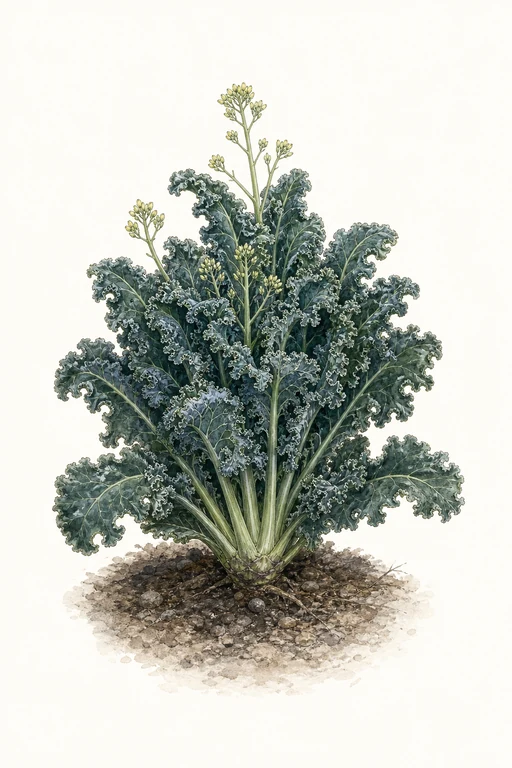
Feel the crisp, cool snap of Dwarf Blue Curled Scotch kale as its leaves unfurl into tight, ruffled rosettes—deep blue-green with a distinctly curled, frilled edge.
Expect a tender, pleasantly sweet bite that holds its character through the season, making it a standout for fresh salads and quick skillet-style sautés, as well as hearty braises and robust soups. Compact plants make it ideal for home beds and containers, delivering abundant leaf harvests from a tidy footprint.
Light: Full SunMaturity: 50 DaysHabit: Rosette
Planting schedules and alerts are optimized for Columbus (Zone 6b).
Crop Dates
| Milestone | Date |
|---|---|
| Start Indoors | Mar 28th |
| Last Frost | Apr 25th |
| Transplant / Sow Outdoors | Apr 25th |
| Harvest Begins | Jun 14th |
| Harvest Ends | Oct 16th |
Crop Details
| Trait | Value |
|---|---|
| Days to Maturity | 50 |
| Sun Requirements | Full Sun |
| Growth Habit | Rosette |
| Support Needed | None |
| Planting Depth | Normal |
| Germination Temp (°F) | 55 |
| Min Soil Temp (°F) | 40 |
| Min Night Temp (°F) | 30 |
| Harden Off (days) | 6 |
Culinary Notes

Chef's Note
Dwarf Blue Curled Scotch kale is built for the swing between raw snap and cooked integrity: the curled leaf keeps structure when heat hits. Choose bright acid (like lemon) and fat (olive oil or butter) to round the earthiness while preserving that frilled-chew texture.

Best Uses
- quick skillet sautés where the leaves wilt fast but don’t turn to mush
- tossed salads that need a leafy green with real crunch under vinaigrette
- hearty soups and braises—bulks up liquid without collapsing into strings
- blended into silky greens purées for topping dumplings or roasted squash

Flavor Profile

Kitchen Pairings
Frequently Asked Questions
How do I manage downy mildew and aphids on Dwarf Blue Curled Scotch (Brassica oleracea var. sabellica/Cauliflower-type kale)?
How often should I water Dwarf Blue Curled Scotch during the main growing phase?
When is Dwarf Blue Curled Scotch ready to harvest?
Sowing Tips

Transplant Conditions
Wait until soil reaches 40°F and nights stay above 30°F before moving outdoors. Harden off for 6 days first.
Expert Note

Start kale indoors for a head start, but transplant only when nights are consistently cool and protect young plants from hard freezes with row cover if needed.