
Eagle Pass
Tender pods arrive with a crisp, snap-at-the-first-bite texture and a clean, green, slightly sweet flavor that shines whether you savor them straight from the garden.
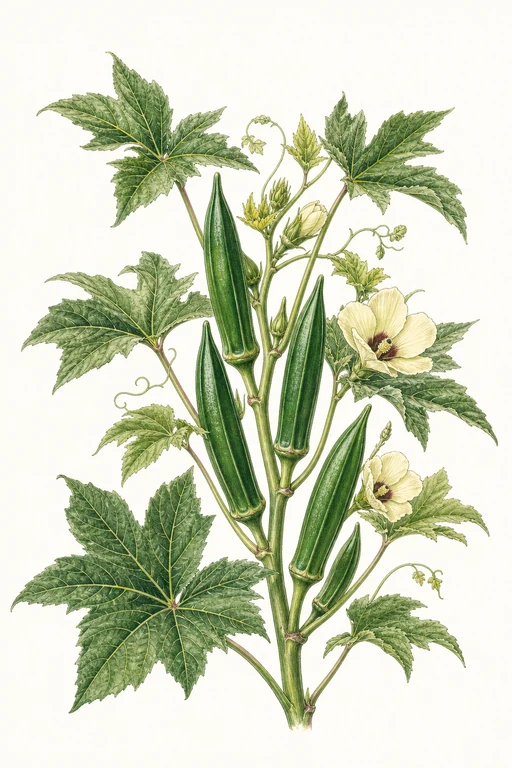
Eagle Pass produces sleek, uniformly sized okra pods with a refined, tender interior—ideal for quick sautéing, roasting, and silky sauces, and also a favorite for pickling when you want bright, tangy crunch. Grow it for a steady harvest rhythm that keeps your plants looking lush and productive through the season.
Light: Full SunMaturity: 55 DaysHabit: Upright
Planting schedules and alerts are optimized for Columbus (Zone 6b).
Crop Dates
| Milestone | Date |
|---|---|
| Start Indoors | Mar 14th |
| Last Frost | Apr 25th |
| Transplant / Sow Outdoors | Jun 20th |
| Harvest Begins | Aug 14th |
| Harvest Ends | Oct 16th |
Crop Details
| Trait | Value |
|---|---|
| Days to Maturity | 55 |
| Sun Requirements | Full Sun |
| Growth Habit | Upright |
| Support Needed | None |
| Planting Depth | Normal |
| Germination Temp (°F) | 70 |
| Min Soil Temp (°F) | 65 |
| Min Night Temp (°F) | 55 |
| Harden Off (days) | 10 |
Culinary Notes

Chef's Note
Eagle Pass okra is built for speed: the pods stay crisp and green, then melt into a glossy, spoon-coating viscosity when you simmer them. If you treat it kindly—hot pan, short cook, or quick brine—it keeps that tender snap that makes okra feel refined instead of sticky.

Best Uses
- quick sauté or blister-roast to keep the pods crisp and green
- gumbos and braises where the pod slime turns the broth glossy
- crispy pickles for bright, tangy crunch
- light tempura/fry where the interior stays tender

Flavor Profile

Kitchen Pairings
Frequently Asked Questions
What pest or disease is most likely on Abelmoschus esculentus (okra/Eagle Pass), and how do I treat it?
How often should I water Abelmoschus esculentus during its main growing phase?
How can I tell when Eagle Pass (Abelmoschus esculentus) pods are ready to harvest?
Sowing Tips

Transplant Conditions
Wait until soil reaches 65°F and nights stay above 55°F before moving outdoors. Harden off for 10 days first.
Expert Note

Soak seeds overnight and transplant only once nighttime temperatures are consistently warm to avoid slow, stunted growth.