
Early Belle
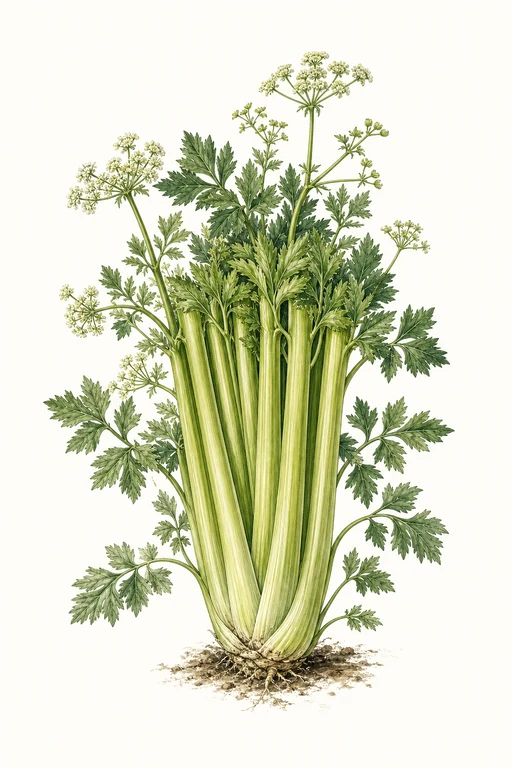
Crisp as cool morning air, Early Belle delivers tender, stringless stalks with a bright, clean snap and a pleasantly mild celery flavor.
At maturity, the plants form an upright, compact habit that helps keep color fresh and texture refined, ideal for gardeners who want dependable performance in about 70 days. Grow Early Belle for fresh bunches and for sauces and pickling where its delicate bite shines.
Light: Part SunMaturity: 70 DaysHabit: Rosette
Crop Dates : 4b
| Milestone | Date |
|---|---|
| Start Indoors | Apr 1st |
| Last Frost | May 13th |
| Transplant / Sow Outdoors | May 13th |
| Harvest Begins | Jul 22nd |
| Harvest Ends | Sep 27th |
Crop Details
| Trait | Value |
|---|---|
| Days to Maturity | 70 |
| Sun Requirements | Part Sun |
| Growth Habit | Rosette |
| Support Needed | None |
| Planting Depth | Surface |
| Germination Temp (°F) | 70 |
| Min Soil Temp (°F) | 40 |
| Min Night Temp (°F) | 35 |
| Harden Off (days) | 5 |
Culinary Notes

Chef's Note
Early Belle is all about that cool, clean snap—tender enough to eat raw without the chew, but still aromatic when it hits heat. Use it chopped fine in brine or soups to keep the flavor bright, not dulled, and reserve the bigger stalks for salads and quick-pickled crunch.

Best Uses
- fresh crudités and citrusy dips where the stalk stays crisp
- leaf-forward salads—thinly shaved for a bracing crunch
- quick pickles and refrigerator brines for a delicate, not-too-seedy tang
- stalk-forward soups and stocks where celery aroma stays bright rather than smoky

Flavor Profile

Kitchen Pairings
Frequently Asked Questions
Why are my Apium graveolens var. dulce (celery root/celeriac-type sweet celery) plants getting yellow, wilting, and brown leaf spots?
How often should I water Apium graveolens var. dulce during the main growing phase (after seedlings are established)?
How can I tell when Apium graveolens var. dulce is ready to harvest (around 70 days)?
Sowing Tips

Transplant Conditions
Wait until soil reaches 40°F and nights stay above 35°F before moving outdoors. Harden off for 5 days first.
Expert Note

Start Early Belle indoors well ahead of the frost window, then transplant as soon as nights are forecast to stay reliably above freezing to minimize bolting and get steady, crisp growth.