
Early Mizuna
Tender, peppery leaves unfurl with a crisp, juicy snap—an early harvest that feels as bright as spring.
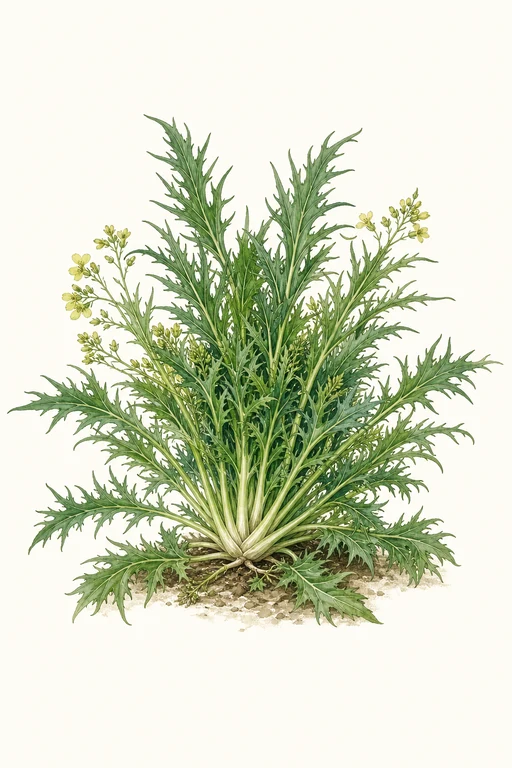
Early Mizuna forms a compact rosette of finely cut, feathery greens with a clean, lively bite that shines in quick stir-fries, silky sauces, and fresh salads, and it also pickles beautifully for tangy depth. At just about 30 days, it’s a satisfying crop for gardeners who love bold flavor without waiting long.
Light: Full SunMaturity: 30 DaysHabit: Rosette
Planting schedules and alerts are optimized for Columbus (Zone 6b).
Crop Dates
| Milestone | Date |
|---|---|
| Start Indoors | Direct Sow |
| Last Frost | Apr 25th |
| Transplant / Sow Outdoors | Apr 18th |
| Harvest Begins | May 18th |
| Harvest Ends | Oct 16th |
Crop Details
| Trait | Value |
|---|---|
| Days to Maturity | 30 |
| Sun Requirements | Full Sun |
| Growth Habit | Rosette |
| Support Needed | None |
| Planting Depth | Normal |
| Germination Temp (°F) | 45 |
| Min Soil Temp (°F) | 40 |
| Min Night Temp (°F) | 32 |
| Harden Off (days) | 5 |
Culinary Notes

Chef's Note
Early mizuna hits with a lively, mustard-leaning snap that stays crisp until it meets heat—perfect for fast wok work or a brief tumble into warm broth. Its peppery brightness loves oily umami (sesame/soy/miso) and sour lift (rice vinegar), and it pickles into a tangy, crunchy condiment rather than a soft green.

Best Uses
- hot quick stir-fries where the leaves wilt in seconds
- silky pan sauces or broth reductions for a peppery-green gloss
- fresh salads that keep a snappy bite under vinaigrette
- quick pickles to turn that mustard edge into tangy crunch

Flavor Profile

Kitchen Pairings
Frequently Asked Questions
What’s a common pest or disease for Brassica rapa var. japonica (mizuna), and how can I stop it?
How often should I water early mizuna during its main growth phase (about days 10–30)?
How do I tell when early mizuna is ready to harvest (around 30 days)?
Sowing Tips

Transplant Conditions
Wait until soil reaches 40°F and nights stay above 32°F before moving outdoors. Harden off for 5 days first.
Expert Note

For the earliest tender leaves, start outdoors as soon as soil is workable and keep plants evenly moist to prevent early bolting.