
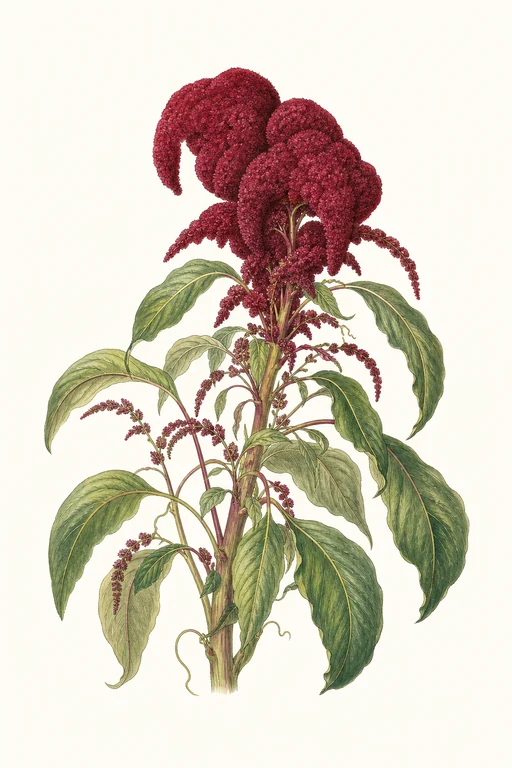
Elephant Head
Velvety, jewel-toned plumes rise with a dramatic, elephant-head silhouette—deep crimson to wine-red—offering a rich, earthy-sweet flavor with a pleasantly tender bite.
At maturity, Elephant Head amaranth forms lush, upright stems and leaves that feel succulent and resilient, perfect for fresh use and for turning into hearty, flavorful preparations like sautés and robust sauces. Grow it for its bold garden presence and its satisfying, nutrient-dense harvest at about 90 days.
Light: Full SunMaturity: 90 DaysHabit: Upright
Planting schedules and alerts are optimized for Columbus (Zone 6b).
Crop Dates
| Milestone | Date |
|---|---|
| Start Indoors | Direct Sow |
| Last Frost | Apr 25th |
| Transplant / Sow Outdoors | Apr 25th |
| Harvest Begins | Jul 24th |
| Harvest Ends | Oct 16th |
Crop Details
| Trait | Value |
|---|---|
| Days to Maturity | 90 |
| Sun Requirements | Full Sun |
| Growth Habit | Upright |
| Support Needed | None |
| Planting Depth | Normal |
| Germination Temp (°F) | 70 |
| Min Soil Temp (°F) | 65 |
| Min Night Temp (°F) | 50 |
| Harden Off (days) | Not Required |
Culinary Notes

Chef's Note
Elephant Head amaranth eats like a cross between tender greens and a mild, earthy grain—sweet enough to stand up to garlic and heat, but soft enough that it doesn’t fight the pan. Turn it into a reduction sauce or finish soups late, and the crimson will go from “jewel” to “velvet” on the spoon.

Best Uses
- quick sauté of tender leaves and young stems with garlic and chili
- hearty, spoon-thick pan sauce (reduce with stock and a splash of acid)
- warm grain-style bowl using the leaves treated like quick-cook greens
- stir-in to soups and stews at the end for color and bite

Flavor Profile

Kitchen Pairings
Frequently Asked Questions
What pest or disease issue commonly affects Amaranthus cruentus (elephant head), and how can I control it?
How often should I water Amaranthus cruentus during the main growing phase?
How do I tell when elephant head Amaranthus cruentus is ready to harvest?
Sowing Tips

Transplant Conditions
Wait until soil reaches 65°F and nights stay above 50°F before moving outdoors.
Expert Note

Sow where you want it to bloom because establishing an elephant-head clump is easier with minimal root disturbance.