
Emerald Giant
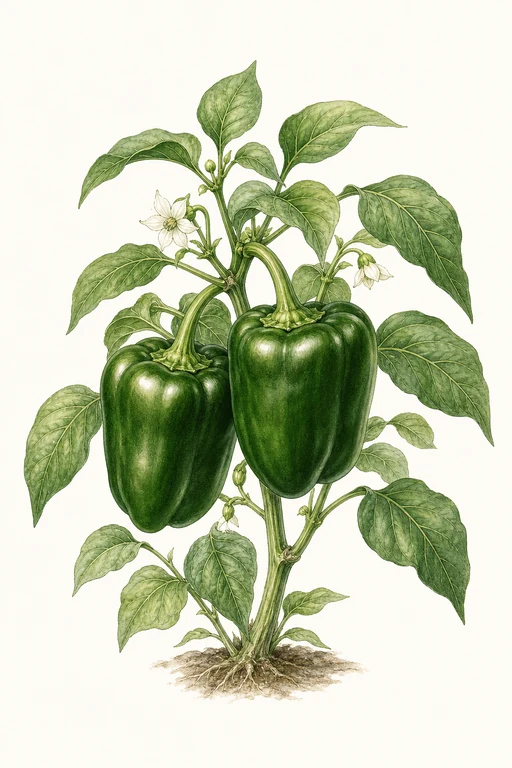
Sink your senses into Emerald Giant’s glossy, deep emerald-green bells—thick-walled and impressively weighty, with a crisp snap and a sweet, green-fresh flavor that stays vibrant as the fruit matures.
This market-class bell pepper forms large, blocky shapes with a smooth, satin skin and a satisfying, juicy bite. Grow it for standout fresh use and for bold, colorful sauces and roasting where its rich color and substantial texture shine.
Light: Full SunMaturity: 90 DaysHabit: Bush
Planting schedules and alerts are optimized for Columbus (Zone 6b).
Crop Dates
| Milestone | Date |
|---|---|
| Start Indoors | Mar 7th |
| Last Frost | Apr 25th |
| Transplant / Sow Outdoors | Jun 20th |
| Harvest Begins | Sep 18th |
| Harvest Ends | Oct 16th |
Crop Details
| Trait | Value |
|---|---|
| Days to Maturity | 90 |
| Sun Requirements | Full Sun |
| Growth Habit | Bush |
| Support Needed | Stake |
| Planting Depth | Normal |
| Germination Temp (°F) | 80 |
| Min Soil Temp (°F) | 60 |
| Min Night Temp (°F) | 50 |
| Harden Off (days) | 10 |
Culinary Notes

Chef's Note
Emerald Giant’s thick walls and weighty juice make it a bell pepper you can actually chew—raw it stays crisp, cooked it turns smoky-sweet instead of watery. Go heavy on lemon and olive oil to keep that green, fresh sweetness bright, especially after roasting.

Best Uses
- slice into crunchy salads and raw crudités—holds dressing without turning floppy
- roast or blister for smoky charred strips that stay sweet
- stuff and bake: thick walls cradle fillings without collapsing
- blend into smooth, vivid-green sauces and salsas (less tangy bite than spicier peppers)

Flavor Profile

Kitchen Pairings
Frequently Asked Questions
What pest or disease problem most often hits Capsicum annuum (Emerald Giant), and how can I prevent and treat it?
How often should I water my Capsicum annuum during the main growing phase (after seedlings establish)?
How do I know when my Emerald Giant Capsicum annuum is ready to harvest?
Sowing Tips

Transplant Conditions
Wait until soil reaches 60°F and nights stay above 50°F before moving outdoors. Harden off for 10 days first.
Expert Note

Start peppers warm and consistently moist, then transplant only when soil is reliably 60°F+ and nights stay near 50°F to avoid stunting.