
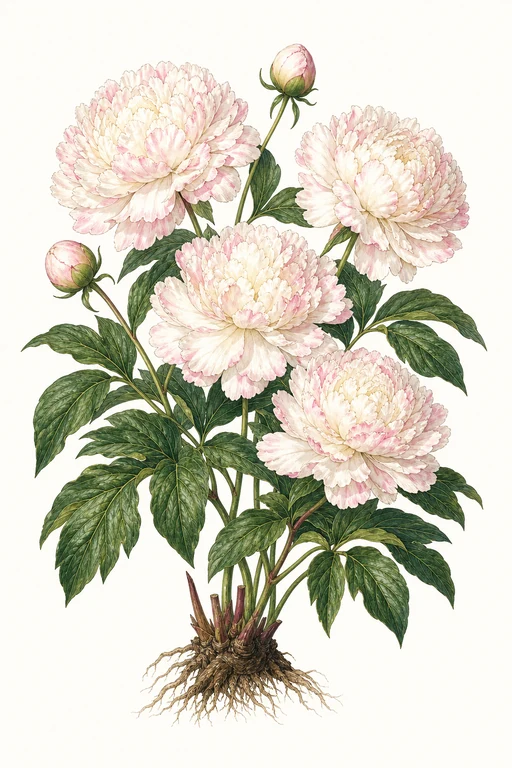
Festiva Maxima
Fragrant, silk-petaled blooms unfurl in grand, layered rosettes—an exquisite medley of creamy white and blushing rose that seems to glow against deep green foliage.
Festiva Maxima’s flowers carry a plush, ruffled texture and a sweet, lingering perfume, making each flowering flush feel like a celebration in the garden. Grow it for show-stopping cut-flower presence and enduring ornamental impact year after year.
Light: Full SunMaturity: 730 DaysHabit: Clumping
Planting schedules and alerts are optimized for Columbus (Zone 6b).
Crop Dates
| Milestone | Date |
|---|---|
| Last Frost | Apr 25th |
| Growing Approach | Protected Environment Only |
Crop Details
| Trait | Value |
|---|---|
| Days to Maturity | 730 |
| Sun Requirements | Full Sun |
| Growth Habit | Clumping |
| Support Needed | None |
| Planting Depth | Normal |
| Germination Temp (°F) | 70 |
| Min Soil Temp (°F) | 45 |
| Min Night Temp (°F) | 35 |
| Harden Off (days) | Not Required |
Culinary Notes

Chef's Note
Ornamental peonies like Festiva Maxima are typically used here for their perfume-forward petals—sweet and scented, but not built for heavy cooking. Treat them like you would a delicate flower: quick infusion or cold garnish so the bloom’s fragrance stays intact.

Best Uses
- use petals sparingly as a garnish on fruit or desserts
- fold into whipped cream or yogurt for floral perfume
- steep petals briefly for a fragrant syrup or tea
- crystallize petals for cake decoration

Flavor Profile

Kitchen Pairings
Frequently Asked Questions
What’s the most common disease problem for Paeonia lactiflora (e.g., Festiva Maxima), and how can I treat it?
How often should I water Paeonia lactiflora during active growth, and what soil moisture level should I maintain?
How do I know when Festiva Maxima (Paeonia lactiflora) flowers are ready to harvest?
Sowing Tips

Transplant Conditions
Wait until soil reaches 45°F and nights stay above 35°F before moving outdoors.
Expert Note

Plant peonies deeply enough to cover the crown properly (typically ~1–2 in below soil surface), and avoid transplanting once established.