
Five Color Silverbeet
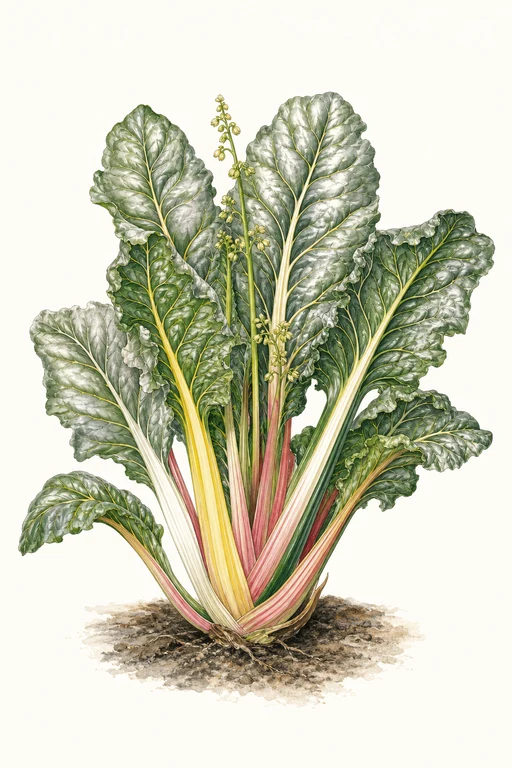
Wake to a living palette: Five Color Silverbeet unfurls crisp, tender leaves with bold, ribboned stems in creamy white, warm gold, rosy pink, and deep emerald—so vivid they feel lit from within.
The flavor is pleasantly sweet and clean, with a gentle mineral edge and a buttery, succulent texture that holds its character from first harvest through steady picking. Ideal for fresh bunches and vibrant sautés, it also shines in hearty braises and colorful steamed plates, bringing rainbow color to every bowl and platter.
Light: Full SunMaturity: 55 DaysHabit: Rosette
Planting schedules and alerts are optimized for Columbus (Zone 6b).
Crop Dates
| Milestone | Date |
|---|---|
| Start Indoors | Direct Sow |
| Last Frost | Apr 25th |
| Transplant / Sow Outdoors | Apr 25th |
| Harvest Begins | Jun 19th |
| Harvest Ends | Oct 16th |
Crop Details
| Trait | Value |
|---|---|
| Days to Maturity | 55 |
| Sun Requirements | Full Sun |
| Growth Habit | Rosette |
| Support Needed | None |
| Planting Depth | Normal |
| Germination Temp (°F) | 70 |
| Min Soil Temp (°F) | 40 |
| Min Night Temp (°F) | 30 |
| Harden Off (days) | 5 |
Culinary Notes

Chef's Note
Five Color Silverbeet eats like a cross between tender spinach and glossy, buttery chard—sweet up front, mineral underneath, with stems that stay juicy instead of turning fibrous. It’s a rainbow plate-weapon: treat it gently (hot, brief cooking), then let acid and fat cling to both leaves and ribboned stems.

Best Uses
- quick sauté in a hot pan until glossy, not dull
- butter-steamed or lightly braised bundles for tenderness
- fold into warm grain bowls where stems stay pleasantly snappy
- steam and finish with lemon/vinegar for a bright, mineral lift

Flavor Profile

Kitchen Pairings
Frequently Asked Questions
What pest or disease most commonly affects Beta vulgaris var. cicla (five color silverbeet), and how can I control it?
How often should I water five color silverbeet during its main growing phase?
How do I tell when five color silverbeet (Beta vulgaris var. cicla) is ready to harvest?
Sowing Tips

Transplant Conditions
Wait until soil reaches 40°F and nights stay above 30°F before moving outdoors. Harden off for 5 days first.
Expert Note

For best jewel-toned stems and tender leaves, keep soil evenly moist and harvest outer leaves regularly to encourage new growth.