
Flame Star
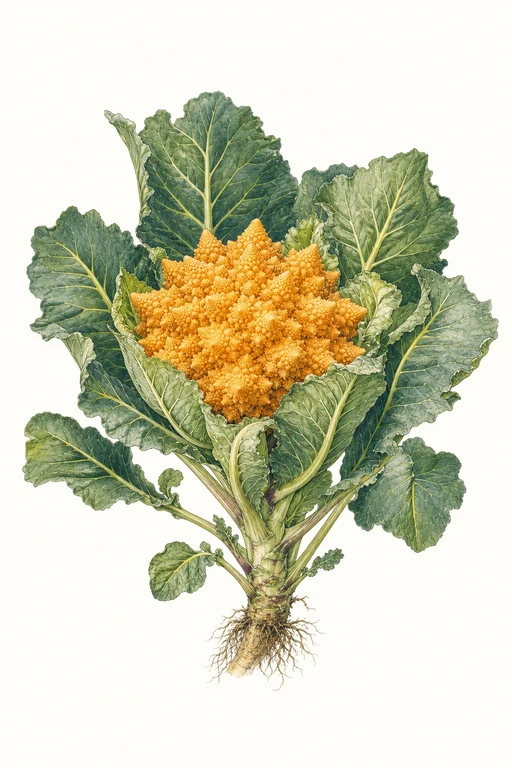
Flame Star cauliflower brings a vivid, sunset-bright presence to the garden—its curd is a warm golden-orange that glows above sturdy foliage.
Expect a fine, creamy texture with a gentle, sweet brassica character, making it especially appealing for roasting and for showcasing in fresh preparations, as well as for velvety sauces. At about 75 days, this variety rewards steady growth with a striking, market-ready head that stands out from the crowd.
Light: Full SunMaturity: 75 DaysHabit: Rosette
Planting schedules and alerts are optimized for Columbus (Zone 6b).
Crop Dates
| Milestone | Date |
|---|---|
| Start Indoors | Mar 28th |
| Last Frost | Apr 25th |
| Transplant / Sow Outdoors | Apr 25th |
| Harvest Begins | Jul 9th |
| Harvest Ends | Oct 16th |
Crop Details
| Trait | Value |
|---|---|
| Days to Maturity | 75 |
| Sun Requirements | Full Sun |
| Growth Habit | Rosette |
| Support Needed | None |
| Planting Depth | Normal |
| Germination Temp (°F) | 75 |
| Min Soil Temp (°F) | 40 |
| Min Night Temp (°F) | 35 |
| Harden Off (days) | 6 |
Culinary Notes

Chef's Note
Flame Star’s golden-orange curd roasts up sweet and tender without going sulfur-sharp, so it holds up beautifully to browning and char-kissed edges. Use it as the creamy canvas for silky purées or sauce reductions—its flavor stays mild enough to let butter, citrus, and aged cheese do the talking.

Best Uses
- high-heat roasting to bronze the edges and keep the interior silky
- showpiece raw or lightly dressed florets where the golden color stays vivid
- blitzing into a smooth, velvety sauce base (or cauliflower purée)

Flavor Profile

Kitchen Pairings
Frequently Asked Questions
What pest or disease is most likely on Brassica oleracea var. botrytis (Flame Star), and how do I control it?
How often should I water Flame Star during the main growing phase (about the first 50–60 days)?
How can I tell when Flame Star (Brassica oleracea var. botrytis) is ready to harvest?
Sowing Tips

Transplant Conditions
Wait until soil reaches 40°F and nights stay above 35°F before moving outdoors. Harden off for 6 days first.
Expert Note

Start cauliflower cool and steady—consistent moisture and cool nights help prevent curd/buttoning, especially when aiming for sweet, tender heads.