
French Breakfast
Crisp as fresh-cut glass, French Breakfast Radish delivers a bright, peppery snap that turns pleasantly sweet as it ripens.
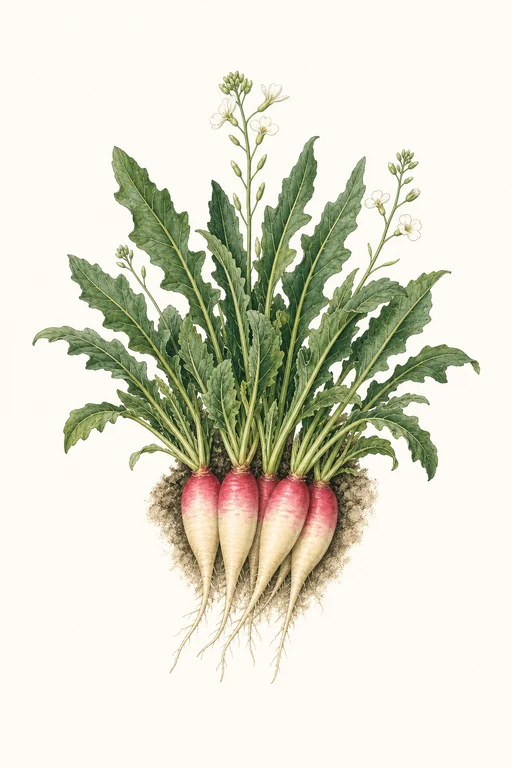
Its blushing white shoulders fade into rosy-red tops, with a tender, juicy interior that stays crisp even at peak size. Ideal for early-season sowings, it shines in fresh salads, on platters, and as a quick-pickling favorite for adding color and zing to any garden harvest.
Light: Full SunMaturity: 25 DaysHabit: Taproot
Location not set yet
Location not set yet
Enter your ZIP for local crop dates
French Breakfast Planting Dates by USDA Zone
Estimated US hardiness-zone windows for sow, transplant, and harvest. Enter a US ZIP above for exact local dates, or open a zone below.
| Zone | Start Indoors | Sow / Transplant | Harvest |
|---|---|---|---|
| Zone 1a | Direct Sow | Jun 15th | Jul 10th – Jul 15th |
| Zone 1b | Direct Sow | Jun 1st | Jun 26th – Aug 1st |
| Zone 2a | Direct Sow | May 25th | Jun 19th – Aug 29th |
| Zone 2b | Direct Sow | May 15th | Jun 9th – Aug 25th |
| Zone 3a | Direct Sow | May 15th | Jun 9th – Sep 1st |
| Zone 3b | Direct Sow | May 19th | Jun 13th – Sep 21st |
| Zone 4a | Direct Sow | May 15th | Jun 9th – Sep 24th |
| Zone 4b | Direct Sow | May 13th | Jun 7th – Sep 27th |
| Zone 5a | Direct Sow | May 8th | Jun 2nd – Sep 30th |
| Zone 5b | Direct Sow | May 4th | May 29th – Oct 5th |
| Zone 6a | Direct Sow | May 1st | May 26th – Oct 10th |
| Zone 6b | Direct Sow | Apr 25th | May 20th – Oct 16th |
| Zone 7a | Direct Sow | Apr 20th | May 15th – Oct 20th |
| Zone 7b | Direct Sow | Apr 10th | May 5th – Oct 28th |
| Zone 8a | Direct Sow | Apr 1st | Apr 26th – Nov 5th |
| Zone 8b | Direct Sow | Mar 23rd | Apr 17th – Nov 12th |
| Zone 9a | Direct Sow | Mar 6th | Mar 31st – Nov 26th |
| Zone 9b | Direct Sow | Feb 9th | Mar 6th – Dec 9th |
| Zone 10a | — | Oct 1st | Oct 26th – Feb 28th |
| Zone 10b | — | Oct 1st | Oct 26th – Feb 28th |
| Zone 11a | — | Oct 1st | Oct 26th – Feb 28th |
| Zone 11b | — | Oct 1st | Oct 26th – Feb 28th |
| Zone 12a | — | Oct 1st | Oct 26th – Feb 28th |
| Zone 12b | — | Oct 1st | Oct 26th – Feb 28th |
| Zone 13a | — | Oct 1st | Oct 26th – Feb 28th |
| Zone 13b | — | Oct 1st | Oct 26th – Feb 28th |
Crop Details
| Trait | Value |
|---|---|
| Days to Maturity | 25 |
| Sun Requirements | Full Sun |
| Growth Habit | Taproot |
| Support Needed | None |
| Planting Depth | Normal |
| Germination Temp (°F) | 55 |
| Min Soil Temp (°F) | 40 |
| Min Night Temp (°F) | 32 |
| Harden Off (days) | Not Required |
Culinary Notes

Chef's Note
French Breakfast radishes are built for the first crunch—an aggressive, peppery snap that softens into gentle sweetness without turning mealy. Slice them fast, salt lightly, and dress with acid and fat so they stay crisp instead of soggy, then let their rosy tops do the visual work.

Best Uses
- paper-thin slices on flaky salt bread with cultured butter
- raw radish-and-herb platters with lemon zest and olive oil
- quick-pickling (vinegar brine) for bright pink-red color retention
- shaved radish salads that don’t weep when dressed quickly

Flavor Profile

Kitchen Pairings
Frequently Asked Questions
What’s a common problem on French Breakfast radish (Raphanus sativus) and how do I control it at home?
How often should I water French Breakfast radish during the main growing phase?
How do I tell when French Breakfast radish is ready to harvest?
Sowing Tips

Transplant Conditions
Wait until soil reaches 40°F and nights stay above 32°F before moving outdoors.
Expert Note

For best mild flavor, keep radishes evenly moist and harvest early before they get pithy or start to bolt.