
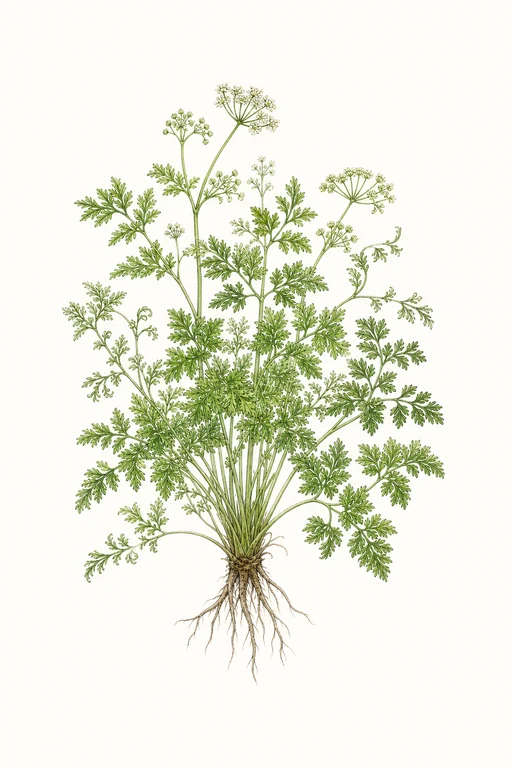
French Chervil
Delicate, lacy fronds unfurl with a fresh, anise-citrus fragrance and a cool, tender bite that feels almost velvety on the palate.
French Chervil forms an airy rosette of finely divided leaves, delivering abundant, bright green foliage for repeated harvests at about 45 days. Grow it for its signature flavor in fresh garnishes and herb blends, where its gentle character shines in sauces and quick pickling brines alike.
Light: Part SunMaturity: 45 DaysHabit: Upright
Planting schedules and alerts are optimized for Columbus (Zone 6b).
Crop Dates
| Milestone | Date |
|---|---|
| Start Indoors | Apr 11th |
| Last Frost | Apr 25th |
| Transplant / Sow Outdoors | May 9th |
| Harvest Begins | Jun 23rd |
| Harvest Ends | Oct 16th |
Crop Details
| Trait | Value |
|---|---|
| Days to Maturity | 45 |
| Sun Requirements | Part Sun |
| Growth Habit | Upright |
| Support Needed | None |
| Planting Depth | Surface |
| Germination Temp (°F) | 60 |
| Min Soil Temp (°F) | 45 |
| Min Night Temp (°F) | 28 |
| Harden Off (days) | 5 |
Culinary Notes

Chef's Note
French chervil is all about restraint: its subtle anise-citrus perfume and tender leaf texture demand heat control—add it off the flame so it stays silky, not stewed. It plays especially well with creamy fats and briny accents, where its cool bite reads crisp instead of bitter.

Best Uses
- finishing garnish for buttered eggs and poached fish
- blended into fines herbes or herb butter for last-minute folding
- quick pickling in light brines for a fresh, aromatic tang
- stirred into warm (not boiling) pan sauces right at the end

Flavor Profile

Frequently Asked Questions
What pests or diseases commonly hit Anthriscus cerefolium (French chervil), and how can I prevent them?
How often should I water Anthriscus cerefolium during its main growing phase?
How do I know when French chervil (Anthriscus cerefolium) is ready to harvest?
Sowing Tips

Transplant Conditions
Wait until soil reaches 45°F and nights stay above 28°F before moving outdoors. Harden off for 5 days first.
Expert Note

For best flavor, grow chervil in cool weather (part shade) and harvest frequently to prevent bolting.