
French Thyme
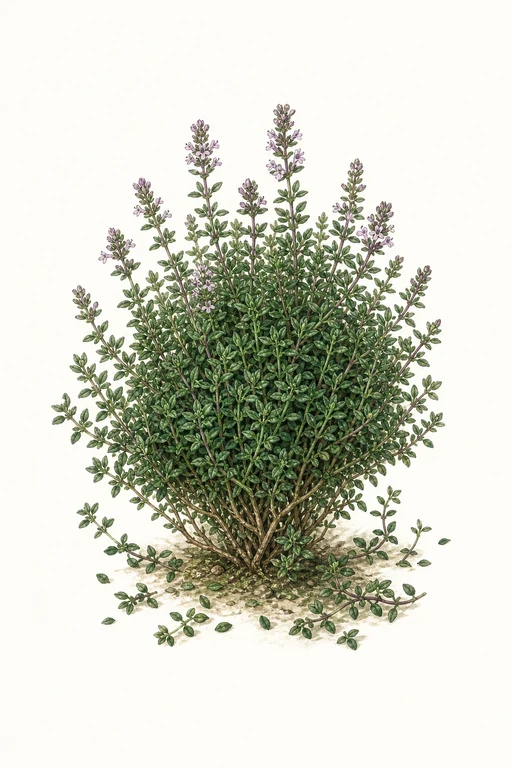
Aromatic as a sunlit garden path—French Thyme releases a bright, savory fragrance with a gentle, slightly sweet lift.
Its fine, narrow leaves form a tidy, evergreen mound of tender sprigs, ideal for gathering again and again as new growth keeps coming. Grow French Thyme for flavorful seasoning in everyday savory dishes, from roasting blends and herb sauces to marinades and pickling brines where its classic, steady character shines.
Light: Full SunMaturity: 60 DaysHabit: Upright
Crop Dates : 8a
| Milestone | Date |
|---|---|
| Start Indoors | Feb 4th |
| Last Frost | Apr 1st |
| Transplant / Sow Outdoors | Apr 1st |
| Harvest Begins | May 31st |
| Harvest Ends | Nov 5th |
Crop Details
| Trait | Value |
|---|---|
| Days to Maturity | 60 |
| Sun Requirements | Full Sun |
| Growth Habit | Upright |
| Support Needed | None |
| Planting Depth | Normal |
| Germination Temp (°F) | 70 |
| Min Soil Temp (°F) | 60 |
| Min Night Temp (°F) | 50 |
| Harden Off (days) | 7 |
Culinary Notes

Chef's Note
French thyme is all about a clean, fragrant lift over a steady savory backbone—its fine leaves release fast when warmed, so it stays aromatic in reductions and marinades. Chop lightly and let it bloom in hot fat (oil or butter) before adding liquids to keep that sunlit perfume from fading.

Best Uses
- rubbing and stuffing—slip sprigs into roast poultry or pork where the oils perfume the fat
- quick infusions: simmer in stock or make a hot herb oil for finishing
- marinades and brines—partner with salt for a steadier, more even flavor curve
- herb sauces and pan reductions—chopped thyme to keep aroma punchy without bitterness

Flavor Profile

Kitchen Pairings
Frequently Asked Questions
What pests or diseases commonly affect Thymus vulgaris (French thyme), and how do I control them?
How often should I water French thyme during active growth, and what soil moisture level should I aim for?
How can I tell when French thyme is ready to harvest (Thymus vulgaris)?
Sowing Tips

Transplant Conditions
Wait until soil reaches 60°F and nights stay above 50°F before moving outdoors. Harden off for 7 days first.
Expert Note

For best germination and flavor, start thinly (lightly covered), keep evenly moist, and transplant only after nights are consistently warm and the soil has warmed.