
Frisee Maraichere
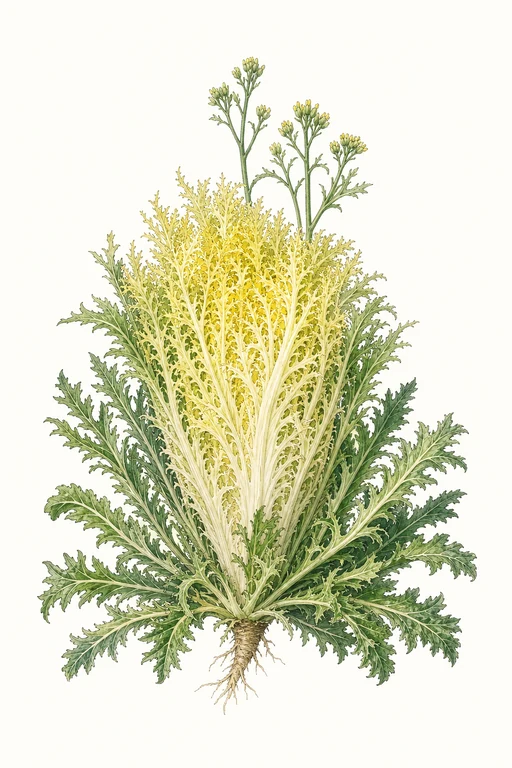
Crisp and vividly frilled, Frisee Maraichere forms tight, feathery heads with a bright, lively bite—tender ribs shaded from pale ivory to soft chartreuse.
The texture is delicately crunchy with a gentle, pleasantly piquant edge that lingers beautifully. Grow it for fresh salads and elegant garnishes, or for roasting and braising where its frills turn silky and sweet at the center.
Light: Part SunMaturity: 55 DaysHabit: Rosette
Planting schedules and alerts are optimized for Columbus (Zone 6b).
Crop Dates
| Milestone | Date |
|---|---|
| Start Indoors | Mar 28th |
| Last Frost | Apr 25th |
| Transplant / Sow Outdoors | Apr 25th |
| Harvest Begins | Jun 19th |
| Harvest Ends | Oct 16th |
Crop Details
| Trait | Value |
|---|---|
| Days to Maturity | 55 |
| Sun Requirements | Part Sun |
| Growth Habit | Rosette |
| Support Needed | None |
| Planting Depth | Normal |
| Germination Temp (°F) | 70 |
| Min Soil Temp (°F) | 40 |
| Min Night Temp (°F) | 30 |
| Harden Off (days) | 5 |
Culinary Notes

Chef's Note
Frisée Maraichere has that tight, feathery crunch plus a pleasantly piquant edge, so it needs either fat or acid to smooth the bitterness. It’s especially good when heated just enough for the frills to turn silky while the center stays lightly sweet—no mushy sad greens.

Best Uses
- shaved or torn frisee salad with a sharp vinaigrette that clings to the crinkles
- bistro-style endive frisée gratin/gratiner—browned edges with a soft, sweet core
- hot braise or quick roast until the frills go silky and the center turns faintly sweet
- crispy garnish for composed plates—use at the last minute to keep the bite

Flavor Profile

Kitchen Pairings
Frequently Asked Questions
What pest or disease is most common on Cichorium endivia (frisée) and how can I manage it at home?
How often should I water frisée (Cichorium endivia) during the main growing phase?
How do I tell when frisée (Cichorium endivia) is ready to harvest?
Sowing Tips

Transplant Conditions
Wait until soil reaches 40°F and nights stay above 30°F before moving outdoors. Harden off for 5 days first.
Expert Note

For best frisee texture and reduced bitterness, grow in cool weather and keep plants from extreme heat after the first harvest.