
Fuego
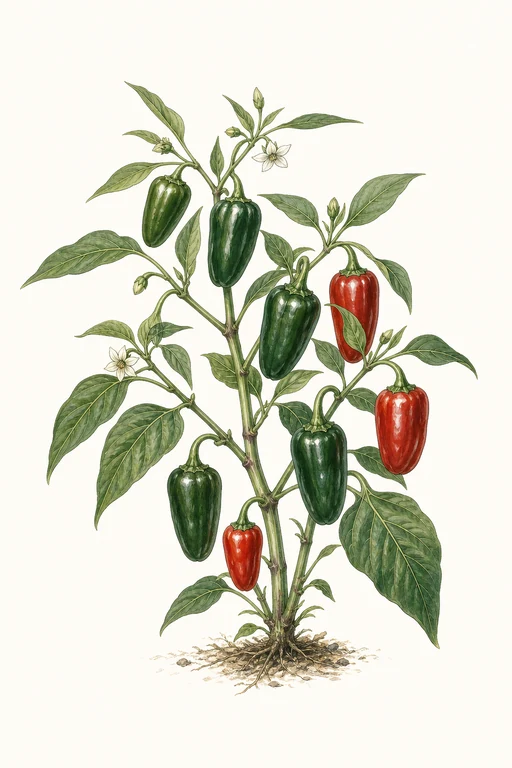
Fiery Fuego jalapeños arrive with a glossy, deep-green sheen that turns to a vivid red as they mature, offering a bright, peppery heat with a clean, lively snap.
The fruits are thick-walled and satisfyingly firm, ideal for stuffing and roasting, and they shine in salsas, sauces, and pickling where their bold character can take center stage. Grow Fuego for a steady harvest over the season—each pepper a jewel of flavor that’s as striking in the garden as it is on the plate.
Light: Full SunMaturity: 80 DaysHabit: Bush
Planting schedules and alerts are optimized for Columbus (Zone 6b).
Crop Dates
| Milestone | Date |
|---|---|
| Start Indoors | Mar 7th |
| Last Frost | Apr 25th |
| Transplant / Sow Outdoors | Jun 20th |
| Harvest Begins | Sep 8th |
| Harvest Ends | Oct 16th |
Crop Details
| Trait | Value |
|---|---|
| Days to Maturity | 80 |
| Sun Requirements | Full Sun |
| Growth Habit | Bush |
| Support Needed | Stake |
| Planting Depth | Normal |
| Germination Temp (°F) | 80 |
| Min Soil Temp (°F) | 60 |
| Min Night Temp (°F) | 50 |
| Harden Off (days) | 10 |
Culinary Notes

Chef's Note
Fuego jalapeños are built for the jobs where structure matters: thick walls, firm bite, and heat that stays clean rather than lingering into bitterness. Roast or pickle them and you get a punchy, glossy pepper flavor that cuts through creamy dairy and rich meats without turning soft.

Best Uses
- stuffed jalapeños—hold shape without collapsing
- hot-roasting and chopping for salsa or smoky crema
- quick pickling for crisp heat that stays sharp
- cooking into a sauce where the skin stays pleasantly intact

Flavor Profile

Frequently Asked Questions
What pest or disease most commonly affects Capsicum annuum (jalapeño) and what should I do first?
How often should I water Capsicum annuum during the main growing phase (from flowering through fruiting)?
How can I tell when my jalapeño peppers (Capsicum annuum) are ready to harvest?
Sowing Tips

Transplant Conditions
Wait until soil reaches 60°F and nights stay above 50°F before moving outdoors. Harden off for 10 days first.
Expert Note

Start seeds indoors with steady warmth, then transplant only after soil reaches ~60°F and nights stay reliably above 50°F to avoid cold-stunting hot peppers.