
Garden Cress 'Curly'
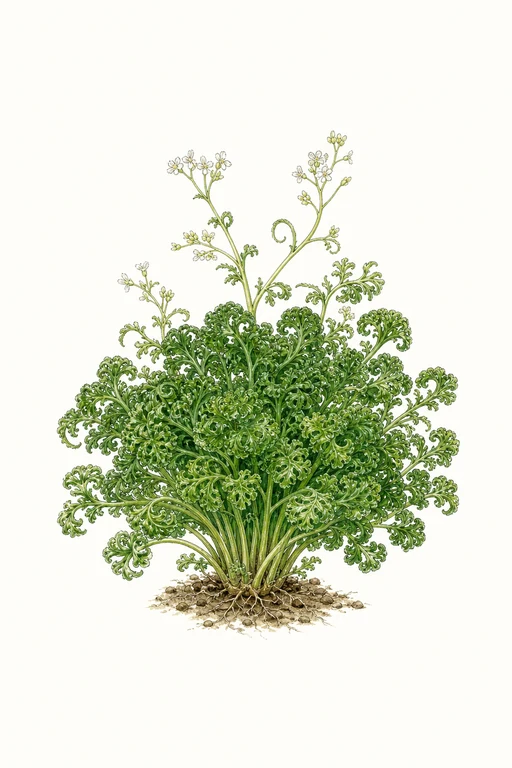
Lush, tightly curled fronds unfurl with a peppery snap and a bright, fresh bite that feels vivid from the first harvest.
Garden Cress ‘Curly’ forms a dense, springy mat of tender leaves—crisp in texture, never tough—ideal for quick flavor boosts in salads, sandwiches, and garnishes, or stirred into herb blends and tangy sauces. Grow it for its fast turnaround and its ornamental, curly charm that keeps you snipping through the season.
Light: Part SunMaturity: 30 DaysHabit: Rosette
Planting schedules and alerts are optimized for Columbus (Zone 6b).
Crop Dates
| Milestone | Date |
|---|---|
| Start Indoors | Direct Sow |
| Last Frost | Apr 25th |
| Transplant / Sow Outdoors | Apr 25th |
| Harvest Begins | May 25th |
| Harvest Ends | Oct 16th |
Crop Details
| Trait | Value |
|---|---|
| Days to Maturity | 30 |
| Sun Requirements | Part Sun |
| Growth Habit | Rosette |
| Support Needed | None |
| Planting Depth | Surface |
| Germination Temp (°F) | 65 |
| Min Soil Temp (°F) | 40 |
| Min Night Temp (°F) | 28 |
| Harden Off (days) | Not Required |
Culinary Notes

Chef's Note
This curly cress is built for the last-minute pass: its tight fronds stay crisp and peppery instead of turning limp. Use it as a sharp finishing green to cut through creamy or fatty foods and make dressings taste brighter without needing heavy cooking.

Best Uses
- snip-over salads and grain bowls right before serving for a crisp pepper kick
- curly frond garnish on sandwiches and rich deli-style meats where it cuts fat
- fold into herb-butters and chimichurri for a quick, hot-green lift
- stir into yogurt or sour cream sauces to wake them up with a clean zing

Flavor Profile

Kitchen Pairings
Frequently Asked Questions
What pest or disease commonly affects Eruca vesicaria subsp. sativa (garden cress) and how do I control it?
How often should I water garden cress during the main growing phase?
How can I tell when curly garden cress is ready to harvest?
Sowing Tips

Transplant Conditions
Wait until soil reaches 40°F and nights stay above 28°F before moving outdoors.
Expert Note

Sow thinly in cool weather and harvest leaf-for-salad frequently to keep it tender and reduce bitterness.