
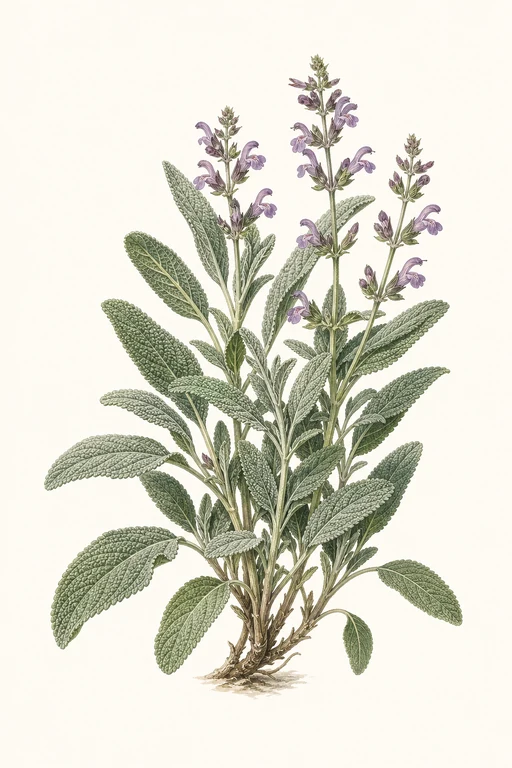
Garden sage
Aromatic and quietly luxurious, Garden sage fills the air with a cool, resinous fragrance and delivers velvety leaves that feel substantial in the hand.
The flavor is distinctly savory and herbaceous—deeply sage-like with a gentle, slightly peppery edge—ideal for building rich herbal character in everyday dishes. Grow it for its dependable perennial performance and its lush, upright habit that keeps producing fragrant foliage through the season.
Light: Full SunMaturity: 60 DaysHabit: Upright
Crop Dates : 13b
| Milestone | Date |
|---|---|
| Start Indoors | — |
| Climate | Frost-Free Climate |
| Transplant / Sow Outdoors | Oct 1st |
| Harvest Begins | Nov 30th |
| Harvest Ends | Feb 28th |
Crop Details
| Trait | Value |
|---|---|
| Days to Maturity | 60 |
| Sun Requirements | Full Sun |
| Growth Habit | Upright |
| Support Needed | None |
| Planting Depth | Normal |
| Germination Temp (°F) | 65 |
| Min Soil Temp (°F) | 60 |
| Min Night Temp (°F) | 50 |
| Harden Off (days) | 7 |
Culinary Notes

Chef's Note
Garden sage is the kind of herb that makes kitchens smell expensive—its cool-resin profile turns fat (especially browned butter) into something nutty and fragrant. Use it early for extraction in stocks and browning fats, but finish with freshly chopped leaves so the peppery edge stays bright instead of going woody.

Best Uses
- brown-butter sage application over gnocchi or squash—let the leaves crisp at the edges
- stir into pork, sausage, and meatloaf stuffing for an earthy, aromatic backbone
- pulse into gremolata-style herb mixes or chimichurri for a sharper, herbal lift
- stew into beans and lentils near the end so the leaves stay fragrant instead of fading

Flavor Profile

Kitchen Pairings
Frequently Asked Questions
What pest or disease most commonly affects Salvia officinalis (garden sage), and how can I treat it?
How often should I water Salvia officinalis during the main growing phase (about the first 6–8 weeks)?
How do I know when garden sage (Salvia officinalis) is ready to harvest?
Sowing Tips

Transplant Conditions
Wait until soil reaches 60°F and nights stay above 50°F before moving outdoors. Harden off for 7 days first.
Expert Note

For best establishment, start seeds indoors early but transplant only after nights are consistently warm, and keep plants on the drier side with excellent drainage.