
Genovese Nero
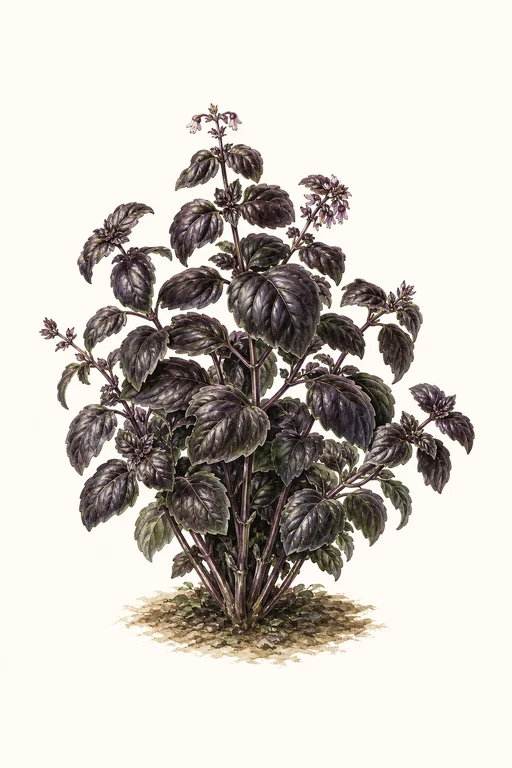
Sink your senses into Genovese Nero’s deep, velvety foliage—an inky, near-black basil that releases a rich, classic aroma the moment you brush the leaves.
The plants form dense, upright clumps with broad, smooth leaves and a tender, succulent texture that stays lush through the season. Grow Genovese Nero for standout fresh flavor in pesto-style sauces, bright herb-forward garnishes, and aromatic finishing—its dark leaves lend a dramatic, garden-to-table elegance.
Light: Full SunMaturity: 60 DaysHabit: Upright
Crop Dates : 2a
| Milestone | Date |
|---|---|
| Start Indoors | Apr 13th |
| Last Frost | May 25th |
| Transplant / Sow Outdoors | Jul 13th |
| Harvest Begins | Sep 11th |
| Harvest Ends | Aug 29th |
Crop Details
| Trait | Value |
|---|---|
| Days to Maturity | 60 |
| Sun Requirements | Full Sun |
| Growth Habit | Upright |
| Support Needed | None |
| Planting Depth | Normal |
| Germination Temp (°F) | 70 |
| Min Soil Temp (°F) | 60 |
| Min Night Temp (°F) | 50 |
| Harden Off (days) | 10 |
Culinary Notes

Chef's Note
Genovese Nero brings a deeper, almost smoky-sweet basil character that hits hardest when it’s fresh—blend it briefly or finish off the heat so the leaves don’t go flat. The tender, velvety texture makes it feel luxurious in pesto and spoonable green sauces, not scratchy like some basils.

Best Uses
- classic pesto-style blend where you want extra aromatic lift
- chiffonade as a warm-finish herb that stays fragrant without getting tough
- muddled into vinaigrettes or green sauces for a darker, funkier note
- tear-and-toss topping on grilled bread or burrata for high-impact freshness

Flavor Profile

Kitchen Pairings
Frequently Asked Questions
What pest or disease problem commonly hits Ocimum basilicum (Genovese Nero), and how do I treat it?
How often should I water Ocimum basilicum during active growth, and what soil moisture level should I aim for?
How can I tell when Genovese Nero (Ocimum basilicum) is ready to harvest?
Sowing Tips

Transplant Conditions
Wait until soil reaches 60°F and nights stay above 50°F before moving outdoors. Harden off for 10 days first.
Expert Note

Start basil indoors for a stronger early harvest, then transplant only after nights are consistently warm to prevent slow growth.