
German Pink
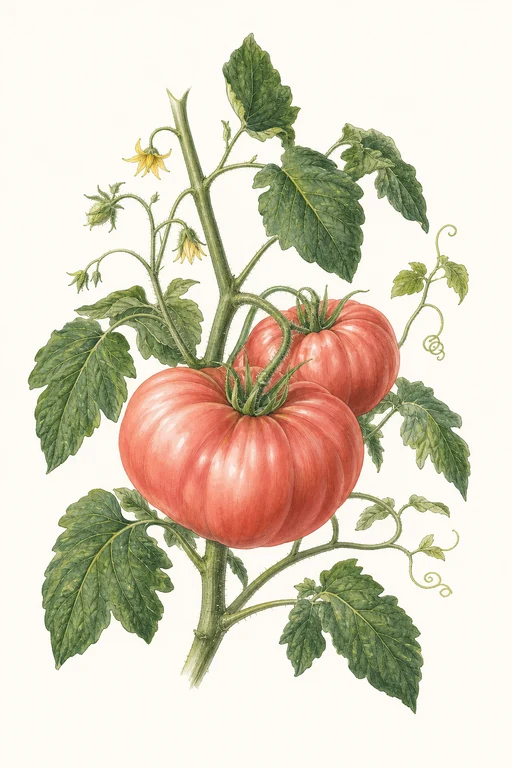
Sink your senses into German Pink’s lush, rosy blush—an opulent beefsteak tomato with a silky, juicy interior and a tender, meaty bite.
The fruit forms large, irregularly ribbed hearts that feel substantial in the hand, yet taste bright and aromatic straight from the garden. Grow German Pink for bold, slice-worthy centerpiece tomatoes and for luscious sauces that showcase its sweet-tang balance and delicate pink glow.
Light: Full SunMaturity: 90 DaysHabit: Indeterminate
Location not set yet
Location not set yet
Enter your ZIP for local crop dates
German Pink Planting Dates by USDA Zone
Estimated US hardiness-zone windows for sow, transplant, and harvest. Enter a US ZIP above for exact local dates, or open a zone below.
| Zone | Start Indoors | Sow / Transplant | Harvest |
|---|---|---|---|
| Zone 1a | Protected Environment Only | ||
| Zone 1b | Protected Environment Only | ||
| Zone 2a | Mar 30th | Jul 20th | Oct 18th – Aug 29th |
| Zone 2b | Mar 20th | Jul 10th | Oct 8th – Aug 25th |
| Zone 3a | Mar 20th | Jul 10th | Oct 8th – Sep 1st |
| Zone 3b | Mar 24th | Jul 14th | Oct 12th – Sep 21st |
| Zone 4a | Mar 20th | Jul 10th | Oct 8th – Sep 24th |
| Zone 4b | Mar 18th | Jul 8th | Oct 6th – Sep 27th |
| Zone 5a | Mar 13th | Jul 3rd | Oct 1st – Sep 30th |
| Zone 5b | Mar 9th | Jun 29th | Sep 27th – Oct 5th |
| Zone 6a | Mar 6th | Jun 26th | Sep 24th – Oct 10th |
| Zone 6b | Feb 28th | Jun 20th | Sep 18th – Oct 16th |
| Zone 7a | Feb 23rd | Jun 15th | Sep 13th – Oct 20th |
| Zone 7b | Feb 13th | Jun 5th | Sep 3rd – Oct 28th |
| Zone 8a | Feb 4th | May 27th | Aug 25th – Nov 5th |
| Zone 8b | Jan 26th | May 18th | Aug 16th – Nov 12th |
| Zone 9a | Jan 9th | May 1st | Jul 30th – Nov 26th |
| Zone 9b | Dec 15th | Apr 6th | Jul 5th – Dec 9th |
| Zone 10a | Continuous Production | ||
| Zone 10b | Continuous Production | ||
| Zone 11a | Continuous Production | ||
| Zone 11b | Continuous Production | ||
| Zone 12a | Continuous Production | ||
| Zone 12b | Continuous Production | ||
| Zone 13a | Continuous Production | ||
| Zone 13b | Continuous Production | ||
Crop Details
| Trait | Value |
|---|---|
| Days to Maturity | 90 |
| Sun Requirements | Full Sun |
| Growth Habit | Indeterminate |
| Support Needed | Cage |
| Planting Depth | Deep |
| Germination Temp (°F) | 70 |
| Min Soil Temp (°F) | 60 |
| Min Night Temp (°F) | 50 |
| Harden Off (days) | 10 |
Culinary Notes

Chef's Note
German Pink gives you beefsteak heft with a silky, juicy center and a bright, not-sharp acidity—ideal for centerpiece slicing where the tomato has to taste like itself. Use it for short heat jobs or slow reductions; either way, it lands glossy and aromatic instead of watery.

Best Uses
- thick slices on bread with salt—juices stay vivid without turning bread to paste
- quick skillet pan-sear or char (cut side down) to hold shape and concentrate sugars
- luscious pink tomato sauce—slow-reduce until it turns glossy and spoon-coating
- summer tomato salads with minimal dressing so the silky interior doesn’t collapse

Flavor Profile

Kitchen Pairings
Frequently Asked Questions
Why are my Solanum lycopersicum (German Pink tomato) plants developing brown spots with fuzzy growth, and what can I do?
How often should I water German Pink tomatoes during the main growing phase to prevent blossom-end rot and splitting?
How can I tell when German Pink tomatoes are ready to harvest?
Sowing Tips

Transplant Conditions
Wait until soil reaches 60°F and nights stay above 50°F before moving outdoors. Harden off for 10 days first.
Expert Note

Start sturdy transplants early but don’t rush planting—wait for consistently warm soil (60°F+) to prevent cold-stress on German Pink tomatoes.