
German Winter Thyme
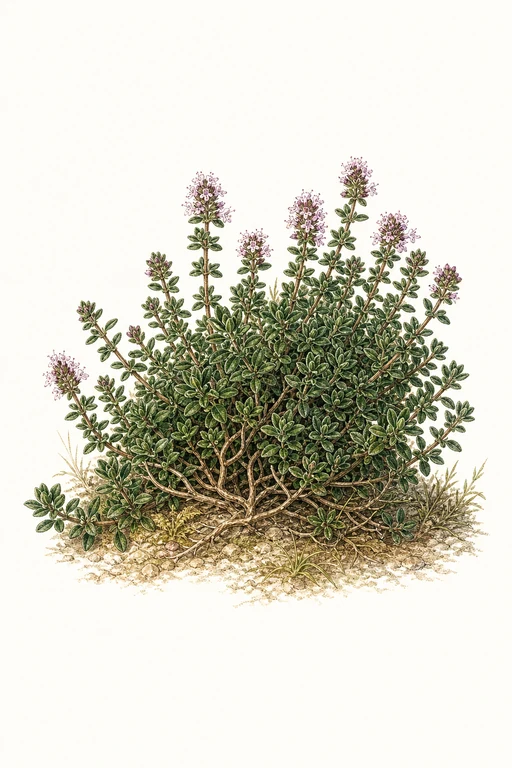
Fragrant at first touch, German Winter Thyme fills the garden with a cool, resinous herbal perfume—brightened by a gentle, savory warmth that lingers on the palate.
Expect compact, woody stems clothed in tiny, deep green leaves with a crisp, resilient texture that holds its character through the season’s chill. Grow it for robust, aromatic use in dried blends, slow-simmered flavoring, and winter-friendly seasoning—an enduring favorite for the herb rack and the potting bench alike.
Light: Full SunMaturity: 90 DaysHabit: Upright
Location not set yet
Location not set yet
Enter your ZIP for local crop dates
German Winter Thyme Planting Dates by USDA Zone
Estimated US hardiness-zone windows for sow, transplant, and harvest. Enter a US ZIP above for exact local dates, or open a zone below.
| Zone | Start Indoors | Sow / Transplant | Harvest |
|---|---|---|---|
| Zone 1a | Protected Environment Only | ||
| Zone 1b | Protected Environment Only | ||
| Zone 2a | Direct Sow | May 25th | Aug 23rd – Aug 29th |
| Zone 2b | Direct Sow | May 15th | Aug 13th – Aug 25th |
| Zone 3a | Direct Sow | May 15th | Aug 13th – Sep 1st |
| Zone 3b | Direct Sow | May 19th | Aug 17th – Sep 21st |
| Zone 4a | Direct Sow | May 15th | Aug 13th – Sep 24th |
| Zone 4b | Direct Sow | May 13th | Aug 11th – Sep 27th |
| Zone 5a | Direct Sow | May 8th | Aug 6th – Sep 30th |
| Zone 5b | Direct Sow | May 4th | Aug 2nd – Oct 5th |
| Zone 6a | Direct Sow | May 1st | Jul 30th – Oct 10th |
| Zone 6b | Direct Sow | Apr 25th | Jul 24th – Oct 16th |
| Zone 7a | Direct Sow | Apr 20th | Jul 19th – Oct 20th |
| Zone 7b | Direct Sow | Apr 10th | Jul 9th – Oct 28th |
| Zone 8a | Direct Sow | Apr 1st | Jun 30th – Nov 5th |
| Zone 8b | Direct Sow | Mar 23rd | Jun 21st – Nov 12th |
| Zone 9a | Direct Sow | Mar 6th | Jun 4th – Nov 26th |
| Zone 9b | Direct Sow | Feb 9th | May 10th – Dec 9th |
| Zone 10a | — | Oct 1st | Dec 30th – Feb 28th |
| Zone 10b | — | Oct 1st | Dec 30th – Feb 28th |
| Zone 11a | — | Oct 1st | Dec 30th – Feb 28th |
| Zone 11b | — | Oct 1st | Dec 30th – Feb 28th |
| Zone 12a | — | Oct 1st | Dec 30th – Feb 28th |
| Zone 12b | — | Oct 1st | Dec 30th – Feb 28th |
| Zone 13a | — | Oct 1st | Dec 30th – Feb 28th |
| Zone 13b | — | Oct 1st | Dec 30th – Feb 28th |
Crop Details
| Trait | Value |
|---|---|
| Days to Maturity | 90 |
| Sun Requirements | Full Sun |
| Growth Habit | Upright |
| Support Needed | None |
| Planting Depth | Normal |
| Germination Temp (°F) | 65 |
| Min Soil Temp (°F) | 40 |
| Min Night Temp (°F) | 30 |
| Harden Off (days) | 7 |
Culinary Notes

Chef's Note
German Winter Thyme hits with a cool, piney-resin perfume, then settles into a savory warmth that doesn’t mute under long cooking. Use it in slow simmering and reductions where its woody leaf character can hold its shape and keep the finish crisp.

Best Uses
- winter-simmered stocks and braises
- dry-rub and roast seasoning where it needs to survive high heat
- slow reduction sauces—stir in early and let it mellow
- dried herb blends for meat, beans, and root vegetables

Flavor Profile

Kitchen Pairings
Frequently Asked Questions
What pest or disease commonly affects Thymus vulgaris (German Winter Thyme), and how do I treat it?
How often should I water German Winter Thyme during its main growing season?
How can I tell when German Winter Thyme is ready to harvest?
Sowing Tips

Transplant Conditions
Wait until soil reaches 40°F and nights stay above 30°F before moving outdoors. Harden off for 7 days first.
Expert Note

For best German Winter Thyme establishment, start seeds indoors only if you must, but otherwise sow outdoors in early spring and keep plants lightly moist until established.