
Glory Of Enkhuizen
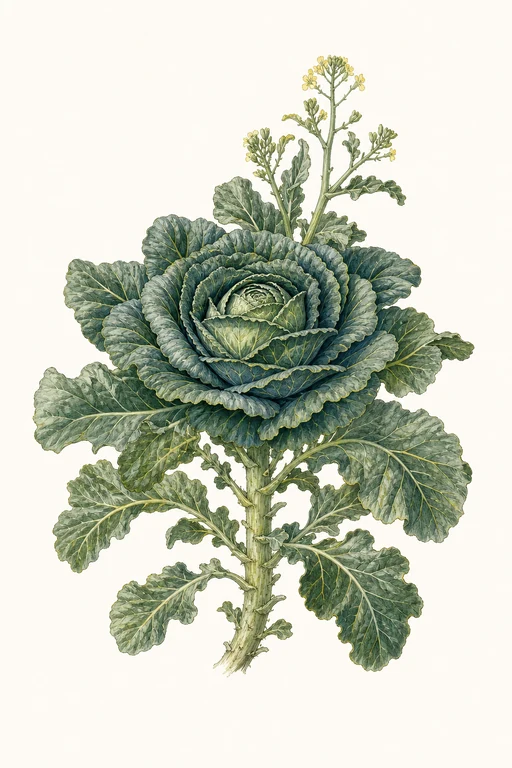
Glory Of Enkhuizen brings a richly satisfying, cool-sweet crunch to the garden—heads form with a dense, flat-to-slightly-rounded Dutch silhouette and a beautifully tight leaf wrap.
The outer foliage is deep blue-green, while the interior promises a pale, creamy tone and a crisp, succulent texture that holds its character beautifully. Ideal for hearty winter-style cabbage uses, from robust braises and savory roasts to tangy fermented preparations and classic slaws.
Light: Full SunMaturity: 85 DaysHabit: Rosette
Location not set yet
Location not set yet
Enter your ZIP for local crop dates
Glory Of Enkhuizen Planting Dates by USDA Zone
Estimated US hardiness-zone windows for sow, transplant, and harvest. Enter a US ZIP above for exact local dates, or open a zone below.
| Zone | Start Indoors | Sow / Transplant | Harvest |
|---|---|---|---|
| Zone 1a | Protected Environment Only | ||
| Zone 1b | Protected Environment Only | ||
| Zone 2a | Apr 27th | May 25th | Aug 18th – Aug 29th |
| Zone 2b | Apr 17th | May 15th | Aug 8th – Aug 25th |
| Zone 3a | Apr 17th | May 15th | Aug 8th – Sep 1st |
| Zone 3b | Apr 21st | May 19th | Aug 12th – Sep 21st |
| Zone 4a | Apr 17th | May 15th | Aug 8th – Sep 24th |
| Zone 4b | Apr 15th | May 13th | Aug 6th – Sep 27th |
| Zone 5a | Apr 10th | May 8th | Aug 1st – Sep 30th |
| Zone 5b | Apr 6th | May 4th | Jul 28th – Oct 5th |
| Zone 6a | Apr 3rd | May 1st | Jul 25th – Oct 10th |
| Zone 6b | Mar 28th | Apr 25th | Jul 19th – Oct 16th |
| Zone 7a | Mar 23rd | Apr 20th | Jul 14th – Oct 20th |
| Zone 7b | Mar 13th | Apr 10th | Jul 4th – Oct 28th |
| Zone 8a | Mar 4th | Apr 1st | Jun 25th – Nov 5th |
| Zone 8b | Feb 23rd | Mar 23rd | Jun 16th – Nov 12th |
| Zone 9a | Feb 6th | Mar 6th | May 30th – Nov 26th |
| Zone 9b | Jan 12th | Feb 9th | May 5th – Dec 9th |
| Zone 10a | — | Oct 1st | Dec 25th – Feb 28th |
| Zone 10b | — | Oct 1st | Dec 25th – Feb 28th |
| Zone 11a | — | Oct 1st | Dec 25th – Feb 28th |
| Zone 11b | — | Oct 1st | Dec 25th – Feb 28th |
| Zone 12a | — | Oct 1st | Dec 25th – Feb 28th |
| Zone 12b | — | Oct 1st | Dec 25th – Feb 28th |
| Zone 13a | — | Oct 1st | Dec 25th – Feb 28th |
| Zone 13b | — | Oct 1st | Dec 25th – Feb 28th |
Crop Details
| Trait | Value |
|---|---|
| Days to Maturity | 85 |
| Sun Requirements | Full Sun |
| Growth Habit | Rosette |
| Support Needed | None |
| Planting Depth | Normal |
| Germination Temp (°F) | 45 |
| Min Soil Temp (°F) | 40 |
| Min Night Temp (°F) | 35 |
| Harden Off (days) | 6 |
Culinary Notes

Chef's Note
Glory of Enkhuizen has that Dutch cabbage knack: a dense, tight leaf wrap that crunches audibly at first bite, then softens without collapsing. It’s built for winter heat—braise, roast, or ferment—where its cool sweetness and clean bite cut through fat and smoke instead of disappearing.

Best Uses
- shredded into slaw that holds a vinaigrette without turning soggy
- braised or roasted wedges for caramelized edges and tender-but-not-mushy layers
- savory cabbage rolls where the leaves need structure
- fermented kimchi-style or classic sauerkraut for bright, tangy bite

Flavor Profile

Kitchen Pairings
Frequently Asked Questions
What pest or disease commonly hits Brassica oleracea var. capitata (cabbage) and how do I control it at home?
How often should I water cabbage during the main head-forming period?
How can I tell when Glory Of Enkhuizen cabbage is ready to harvest?
Sowing Tips

Transplant Conditions
Wait until soil reaches 40°F and nights stay above 35°F before moving outdoors. Harden off for 6 days first.
Expert Note

Start indoors early enough to size up before heat arrives, then transplant into cool weather so the heads set tightly and you get storability.