
Gobbo di Nizza
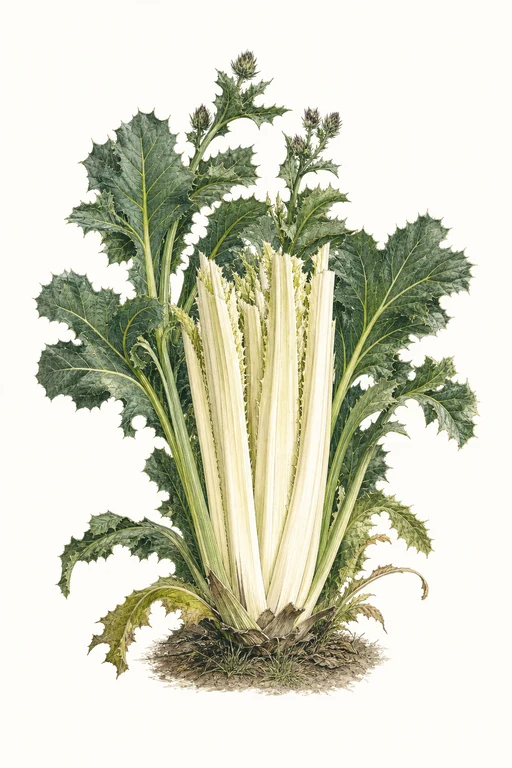
Gobbo di Nizza brings a striking, tender-hearted cardoon to the garden—crisp, succulent ribs with a refined, gently bittersweet edge that feels both elegant and satisfying.
At maturity, the blanched stalks develop a pale, creamy tone and a pleasantly snappy texture, ideal for showcasing in bold preparations and hearty seasonal dishes. Grow it for its architectural presence and for the way its flavor deepens beautifully when featured as the star of the plate.
Light: Full SunMaturity: 110 DaysHabit: Upright
Planting schedules and alerts are optimized for Columbus (Zone 6b).
Crop Dates
| Milestone | Date |
|---|---|
| Start Indoors | Feb 14th |
| Last Frost | Apr 25th |
| Transplant / Sow Outdoors | May 9th |
| Harvest Begins | Aug 27th |
| Harvest Ends | Oct 16th |
Crop Details
| Trait | Value |
|---|---|
| Days to Maturity | 110 |
| Sun Requirements | Full Sun |
| Growth Habit | Upright |
| Support Needed | None |
| Planting Depth | Normal |
| Germination Temp (°F) | 70 |
| Min Soil Temp (°F) | 45 |
| Min Night Temp (°F) | 28 |
| Harden Off (days) | 7 |
Culinary Notes

Chef's Note
This tender-hearted cardoon (Gobbo di Nizza) has that artichoke-family bittersweet edge, but it stays snappy enough to hold up to heat without turning to mush. It shines when you embrace the bitterness—either braised into silkiness or balanced with lemon and dairy to make each rib taste distinct.

Best Uses
- braised or stewed until the ribs turn creamy-tender
- hot-griddled or roasted for browned edges and snap
- quick blanch-and-dress preparations to keep it crisp
- creamy gratins where bitterness softens in the dairy

Flavor Profile

Kitchen Pairings
Frequently Asked Questions
What pest or disease commonly affects Cynara cardunculus (Gobbo di Nizza), and what should I do?
How often should I water Gobbo di Nizza during the main growing phase, and what soil moisture level is ideal?
How can I tell when Gobbo di Nizza (Cynara cardunculus) is ready to harvest?
Sowing Tips

Transplant Conditions
Wait until soil reaches 45°F and nights stay above 28°F before moving outdoors. Harden off for 7 days first.
Expert Note

Grow cardoon like an artichoke relative: start indoors early, then blanch the stalks by tying and covering them in late season for tenderness and reduced bitterness.