
Golden Chard
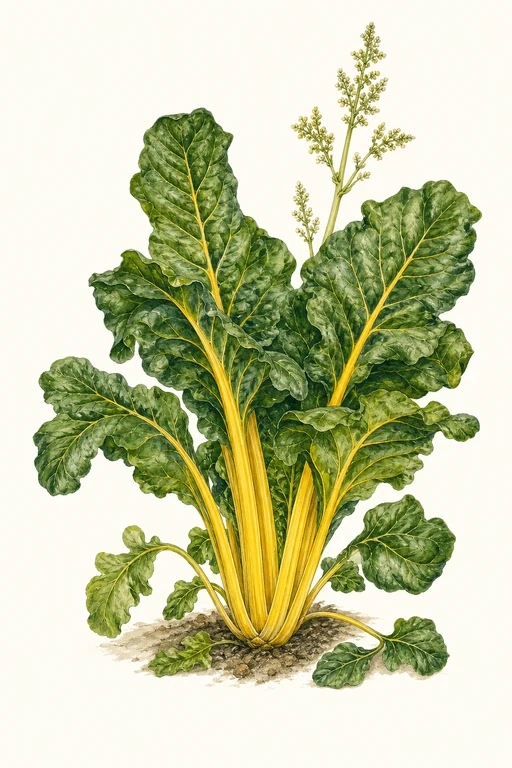
Sunlit and tender, Golden Chard brings a buttery glow to the garden with crisp, succulent stems and a velvety leaf that turns richly golden as it matures.
The flavor is pleasantly mild and sweet, with a delicate earthiness that shines in fresh salads and quick sautéed dishes, and it also lends itself beautifully to vibrant sauces and savory braises. Grow it for a steady harvest of colorful, spoonable greens from early summer through the season’s warmest stretches.
Light: Full SunMaturity: 55 DaysHabit: Rosette
Crop Dates : 2a
| Milestone | Date |
|---|---|
| Start Indoors | Apr 27th |
| Last Frost | May 25th |
| Transplant / Sow Outdoors | May 18th |
| Harvest Begins | Jul 12th |
| Harvest Ends | Aug 29th |
Crop Details
| Trait | Value |
|---|---|
| Days to Maturity | 55 |
| Sun Requirements | Full Sun |
| Growth Habit | Rosette |
| Support Needed | None |
| Planting Depth | Normal |
| Germination Temp (°F) | 70 |
| Min Soil Temp (°F) | 40 |
| Min Night Temp (°F) | 30 |
| Harden Off (days) | 6 |
Culinary Notes

Chef's Note
Golden Chard’s sweet, buttery stems and velvety leaf make it the rare green that can take heat without turning sharp or stringy. It shines when you keep cooking fast and finishing bright—think glossy sautéed greens, not long, aggressive boiling.

Best Uses
- quick sauté or steam until glossy, then dress with salt and fat
- stir-in or fold into silky soups and purées for spoonable greens
- braise low and covered, then finish with a squeeze of citrus
- warm salads where it stays tender under vinaigrette heat

Flavor Profile

Kitchen Pairings
Frequently Asked Questions
What pest or disease commonly affects Swiss chard (Beta vulgaris var. cicla), and how can I control it in golden chard?
How often should I water golden chard during its main growing phase to keep it productive?
How do I tell when golden chard (Beta vulgaris var. cicla) is ready to harvest?
Sowing Tips

Transplant Conditions
Wait until soil reaches 40°F and nights stay above 30°F before moving outdoors. Harden off for 6 days first.
Expert Note

For best color and flavor, keep soil evenly moist and harvest outer leaves regularly (avoid letting plants bolt in hot weather).