
Golden Flower
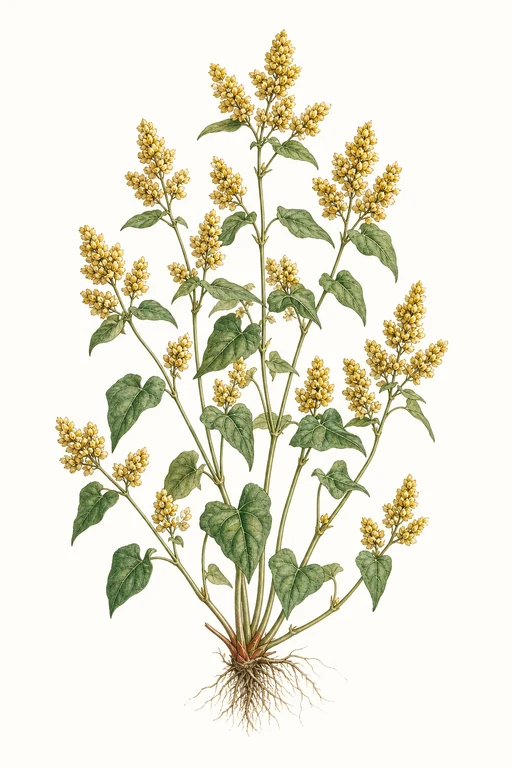
Sunlit and aromatic, Golden Flower buckwheat blooms with a profusion of warm, golden blossoms that lift the garden’s air and draw pollinators in abundance.
The grain develops with a gently tart character and a pleasantly nutty depth, offering a distinctive foundation for hearty, rustic preparations and flavorful blends. Grow it for its striking flowering display and its rewarding, harvest-ready seed crop in about 75 days.
Light: Full SunMaturity: 75 DaysHabit: Upright
Planting schedules and alerts are optimized for Columbus (Zone 6b).
Crop Dates
| Milestone | Date |
|---|---|
| Start Indoors | Direct Sow |
| Last Frost | Apr 25th |
| Transplant / Sow Outdoors | Apr 25th |
| Harvest Begins | Jul 9th |
| Harvest Ends | Oct 16th |
Crop Details
| Trait | Value |
|---|---|
| Days to Maturity | 75 |
| Sun Requirements | Full Sun |
| Growth Habit | Upright |
| Support Needed | None |
| Planting Depth | Normal |
| Germination Temp (°F) | 65 |
| Min Soil Temp (°F) | 55 |
| Min Night Temp (°F) | 45 |
| Harden Off (days) | Not Required |
Culinary Notes

Chef's Note
Golden Flower buckwheat runs nutty with a clean, lightly tart edge—great when you want the grain to stay distinct, not just soak up sauce. Toast the groats first and cook to a tender chew, where its toasted aroma and tart snap carry through hot bowls and breakfast batter alike.

Best Uses
- hearty buckwheat porridge cooked with broth until creamy and thick
- toasted buckwheat groats for grain bowls—steam through, then keep it firm
- rustic buckwheat pancakes or crepes for a nutty, tang-leaning batter
- buckwheat-based pilaf or mixed-grain pilau where the tartness pops

Flavor Profile

Frequently Asked Questions
What pest or disease most commonly affects Tartary buckwheat (Fagopyrum tataricum) and how can I manage it?
How often should I water Fagopyrum tataricum during its main growing phase?
How do I tell when Golden Flower/Tartary buckwheat is ready to harvest?
Sowing Tips

Transplant Conditions
Wait until soil reaches 55°F and nights stay above 45°F before moving outdoors.
Expert Note

Sow buckwheat on warm soil and keep it well-watered until emergence—its fast growth and flowers help attract pollinators while improving soil in rotations.