
Golden Jubilee
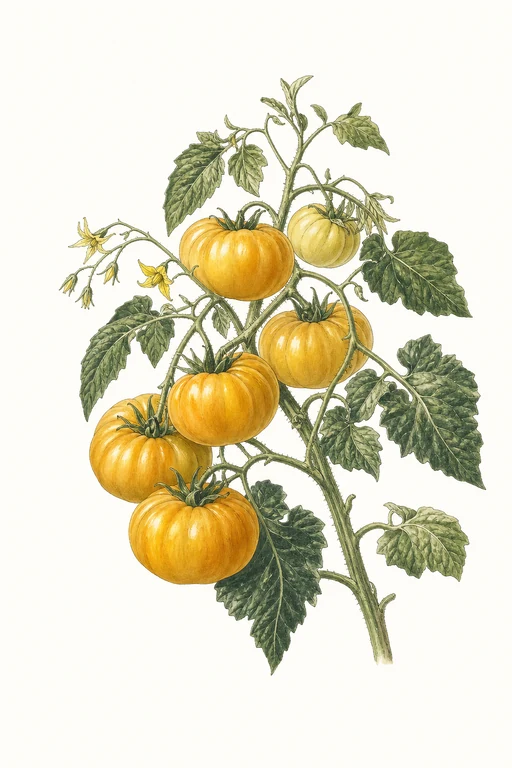
Sun-warmed and luminous, Golden Jubilee slices open to reveal a rich, honey-gold flesh with a bright, tangy sweetness and a silky, juicy bite.
The fruit’s classic slicing shape balances firm meaty texture with gentle melt—ideal for showcasing in bold, colorful salads, vibrant sauces, and quick pickling for a sunny accent. Grow this 80-day standout for a steady harvest of golden gems that turn every garden bed into a glowing centerpiece.
Light: Full SunMaturity: 80 DaysHabit: Determinate
Crop Dates : 8b
| Milestone | Date |
|---|---|
| Start Indoors | Feb 2nd |
| Last Frost | Mar 23rd |
| Transplant / Sow Outdoors | May 18th |
| Harvest Begins | Aug 6th |
| Harvest Ends | Nov 12th |
Crop Details
| Trait | Value |
|---|---|
| Days to Maturity | 80 |
| Sun Requirements | Full Sun |
| Growth Habit | Determinate |
| Support Needed | Cage |
| Planting Depth | Deep |
| Germination Temp (°F) | 75 |
| Min Soil Temp (°F) | 60 |
| Min Night Temp (°F) | 50 |
| Harden Off (days) | 9 |
Culinary Notes

Chef's Note
This slicing tomato leans sweet-tangy with a juicy, silky interior—meant to be eaten where its structure can show. Slice it thick and treat it like a centerpiece: salt, acid, olive oil, and quick heat let it go glossy without turning watery.

Best Uses
- thick slices on sourdough with a slick of mayo or aioli (won’t collapse instantly)
- bold salad with a sharp vinaigrette where the juicy flesh keeps things glossy
- quick pickling for a sunny, briny-sweet accent
- fast sauté and skillet sauce—let it reduce just until glossy

Flavor Profile

Kitchen Pairings
Frequently Asked Questions
What pest or disease most often affects Solanum lycopersicum (tomato) and what should I do?
How often should I water Solanum lycopersicum during the main growing phase?
How can I tell when Solanum lycopersicum is ready to harvest at about 80 days?
Sowing Tips

Transplant Conditions
Wait until soil reaches 60°F and nights stay above 50°F before moving outdoors. Harden off for 9 days first.
Expert Note

For the best flavor and to avoid cold-soil stunting, transplant only when night temps stay reliably warm (and soil is ~60°F+), then keep plants evenly watered for steady fruit set.