
Golden Self Blanching
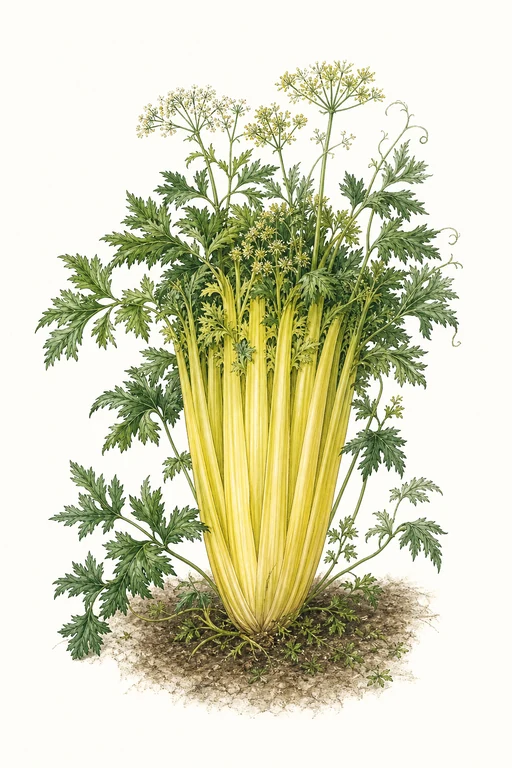
Golden Self Blanching celery brings a luminous, honeyed-green stalk that feels crisp and tender from the first bite—sweet, clean, and pleasantly aromatic.
Its self-blanching habit gently shields the inner ribs for a naturally pale, buttery tenderness, while the outer stalks stay sturdy and upright for an elegant harvest. Grow it for refreshing snacking, vibrant salads, and bright flavor in soups, stews, and classic mirepoix-style blends.
Light: Part SunMaturity: 75 DaysHabit: Upright
Crop Dates : 11a
| Milestone | Date |
|---|---|
| Start Indoors | — |
| Climate | Frost-Free Climate |
| Transplant / Sow Outdoors | Oct 1st |
| Harvest Begins | Dec 15th |
| Harvest Ends | Feb 28th |
Crop Details
| Trait | Value |
|---|---|
| Days to Maturity | 75 |
| Sun Requirements | Part Sun |
| Growth Habit | Upright |
| Support Needed | None |
| Planting Depth | Normal |
| Germination Temp (°F) | 70 |
| Min Soil Temp (°F) | 40 |
| Min Night Temp (°F) | 35 |
| Harden Off (days) | 6 |
Culinary Notes

Chef's Note
Golden Self Blanching stays sweet and elegant rather than sharp, so it’s at its best when you let the crunch and pale, buttery tenderness show—raw or only lightly cooked. Skip heavy aromatics in favor of lemony brightness and dairy fats; this celery sweetens the whole pot instead of demanding it.

Best Uses
- cut into cold crunchy batons for snacking with salty dips
- shave raw into salads where it stays crisp under a light vinaigrette
- make a pale, tender celery-forward mirepoix for soups and braises
- sauté briefly and fold into stock-based stews for aromatic lift without overpowering

Flavor Profile

Kitchen Pairings
Frequently Asked Questions
What pests or diseases commonly affect Apium graveolens (celery/“golden self-blanching”), and how can I treat them?
How often should I water golden self-blanching celery during the main growing phase?
How do I know when Apium graveolens var. dulce is ready to harvest?
Sowing Tips

Transplant Conditions
Wait until soil reaches 40°F and nights stay above 35°F before moving outdoors. Harden off for 6 days first.
Expert Note

Start indoors early and transplant only once nights are reliably warm, since celery is sensitive to cold snaps that can delay or button it.