
Goliath Original Hybrid
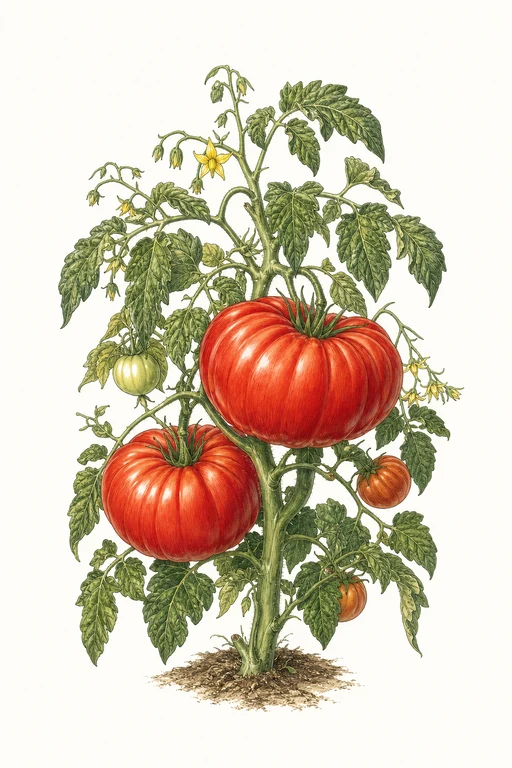
Sink your senses into the sheer, juicy heft of Goliath Original Hybrid—an impressively large beefsteak tomato with a rich, sweet-tart balance and a lush, meaty bite.
The flesh is dense and velvety, with a satisfying firmness that holds its shape for bold slices and hearty, garden-fresh plates. Grow it for standout summer abundance: a showy centerpiece fruit that rewards attentive care with full, flavorful harvests around 90 days.
Light: Full SunMaturity: 90 DaysHabit: Determinate
Crop Dates : 2a
| Milestone | Date |
|---|---|
| Start Indoors | Apr 13th |
| Last Frost | May 25th |
| Transplant / Sow Outdoors | Jul 20th |
| Harvest Begins | Oct 18th |
| Harvest Ends | Aug 29th |
Crop Details
| Trait | Value |
|---|---|
| Days to Maturity | 90 |
| Sun Requirements | Full Sun |
| Growth Habit | Determinate |
| Support Needed | Cage |
| Planting Depth | Deep |
| Germination Temp (°F) | 70 |
| Min Soil Temp (°F) | 60 |
| Min Night Temp (°F) | 50 |
| Harden Off (days) | 10 |
Culinary Notes

Chef's Note
Built like a proper beefsteak: dense, slice-stable flesh with a sweet-tart snap that tastes as good uncooked as it does when you sear the cut surfaces for caramelized edges. Ideal for heavy, creamy partners—won’t turn to mush in a sandwich and still delivers real juice on the first bite.

Best Uses
- thick sandwich slices that won’t collapse under mayo or cured meat
- classic summer tomato platter with flaky salt and good olive oil
- seared/roasted slices where the flesh stays firm and bronzes at the edges
- burger-top tomato slices for a juicy bite with structure

Flavor Profile

Kitchen Pairings
Frequently Asked Questions
What’s the most common disease problem for Solanum lycopersicum (tomato) and how do I prevent and treat it?
How often should I water Solanum lycopersicum during the main growing phase to avoid fruit problems?
How can I tell when a Solanum lycopersicum crop is ready to harvest?
Sowing Tips

Transplant Conditions
Wait until soil reaches 60°F and nights stay above 50°F before moving outdoors. Harden off for 10 days first.
Expert Note

For compact, container-friendly tomatoes, start seeds 6 weeks before the transplant date and keep seedlings at steady warmth to prevent cold-stunting after transplant.