
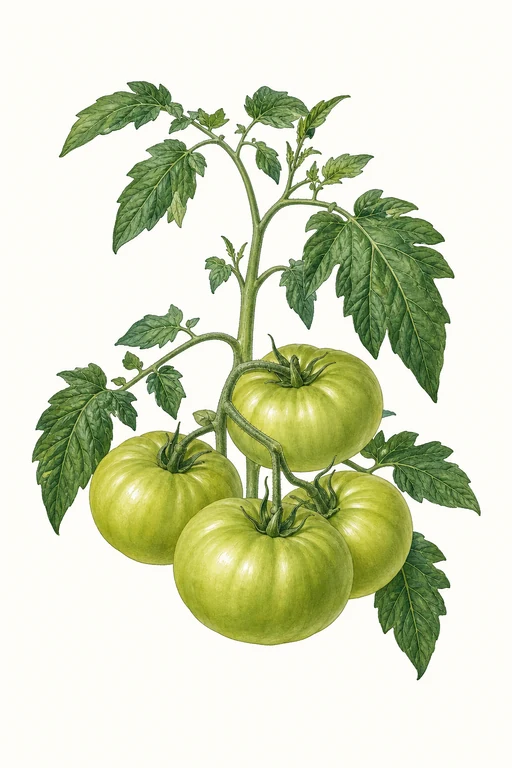
Green Giant
Sink your teeth into Green Giant’s lush, juicy slices—an inviting balance of bright, green-tinted sweetness and a gentle, tomato-forward tang.
The flesh is firm yet tender with a classic slicing texture that holds its shape beautifully, making it ideal for fresh, vibrant summer use and for preserving the variety’s distinctive flavor in sauces and pickling-style preparations. For home gardeners, this 85-day slicer delivers a bold harvest of substantial, meaty fruit with an unmistakably garden-fresh appeal.
Light: Full SunMaturity: 85 DaysHabit: Indeterminate
Crop Dates : 9a
| Milestone | Date |
|---|---|
| Start Indoors | Jan 9th |
| Last Frost | Mar 6th |
| Transplant / Sow Outdoors | May 1st |
| Harvest Begins | Jul 25th |
| Harvest Ends | Nov 26th |
Crop Details
| Trait | Value |
|---|---|
| Days to Maturity | 85 |
| Sun Requirements | Full Sun |
| Growth Habit | Indeterminate |
| Support Needed | Stake |
| Planting Depth | Deep |
| Germination Temp (°F) | 75 |
| Min Soil Temp (°F) | 60 |
| Min Night Temp (°F) | 50 |
| Harden Off (days) | 10 |
Culinary Notes

Chef's Note
Built for slicing: this variety stays structured when you cut it thick, so it eats juicy and meaty instead of watery. The balanced tang makes it work for quick reductions and pickle-style ferments without turning sharp or dull.

Best Uses
- thick summer slices on sourdough with flaky salt—won’t collapse into mush
- quick skillet simmered tomato sauce where the chunks stay intact
- pickle-style preserves for a tangy, vividly tomato bite
- grilled or broiled tomato rounds that hold shape and caramelize at the edges

Flavor Profile

Kitchen Pairings
Frequently Asked Questions
What pest or disease is most common on Solanum lycopersicum (tomatoes) like ‘Green Giant,’ and how can I manage it?
During the main growing phase, how often should I water my Solanum lycopersicum, and what soil moisture target should I maintain?
How can I tell when Solanum lycopersicum is ready to harvest (around 85 days to maturity)?
Sowing Tips

Transplant Conditions
Wait until soil reaches 60°F and nights stay above 50°F before moving outdoors. Harden off for 10 days first.
Expert Note

Transplant when soil is reliably warm (not just after frost) and keep evenly watered to prevent cracking and blossom-end rot.