
Green Pod
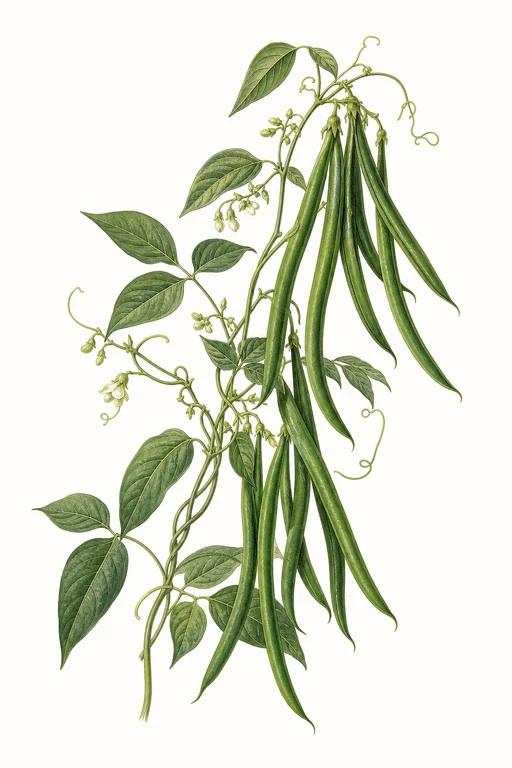
Sweetly fragrant at first touch, Green Pod long beans unfurl into glossy, deep green pods that feel crisp and springy—never stringy when picked at their prime.
Their tender, elongated form shines in fresh salads and quick stir-fries, and they also excel when roasted until lightly char-kissed or simmered into vibrant sauces. A garden favorite at about 60 days, this variety delivers abundant, uniform pods that keep coming for an extended harvest window.
Light: Full SunMaturity: 60 DaysHabit: Vine
Planting schedules and alerts are optimized for Columbus (Zone 6b).
Crop Dates
| Milestone | Date |
|---|---|
| Start Indoors | Direct Sow |
| Last Frost | Apr 25th |
| Transplant / Sow Outdoors | Apr 25th |
| Harvest Begins | Jun 24th |
| Harvest Ends | Oct 16th |
Crop Details
| Trait | Value |
|---|---|
| Days to Maturity | 60 |
| Sun Requirements | Full Sun |
| Growth Habit | Vine |
| Support Needed | Trellis |
| Planting Depth | Normal |
| Germination Temp (°F) | 70 |
| Min Soil Temp (°F) | 60 |
| Min Night Temp (°F) | 55 |
| Harden Off (days) | Not Required |
Culinary Notes

Chef's Note
Picked young, these long beans stay crisp and never get that fibrous, stringy snag—perfect for eating at full spring. They handle high heat well: a quick wok char or hot-roast blister turns that mild, sweet-green taste into something nutty and fragrant.

Best Uses
- flash stir-fries where the pods stay crisp (minimal sauce, high heat)
- roasting on a hot sheet until blistered at the edges
- thin-sliced raw salads with a sharp vinaigrette
- quick simmered sauces where they lend body without turning mushy

Flavor Profile

Frequently Asked Questions
What pest or disease most commonly affects Vigna unguiculata subsp. sesquipedalis (green pod) and how can I treat it?
How often should I water green pod during peak pod production?
How can I tell when Vigna unguiculata subsp. sesquipedalis is ready to harvest?
Sowing Tips

Transplant Conditions
Wait until soil reaches 60°F and nights stay above 55°F before moving outdoors.
Expert Note

Direct-sow after soil warms and keep pods picked frequently—long beans are most tender when harvested young.