
Green Swiss Chard
Meet Green Swiss Chard for a garden-to-plate harvest of lush, tender leaves with a clean, spinach-like sweetness and a gentle, mineral snap.
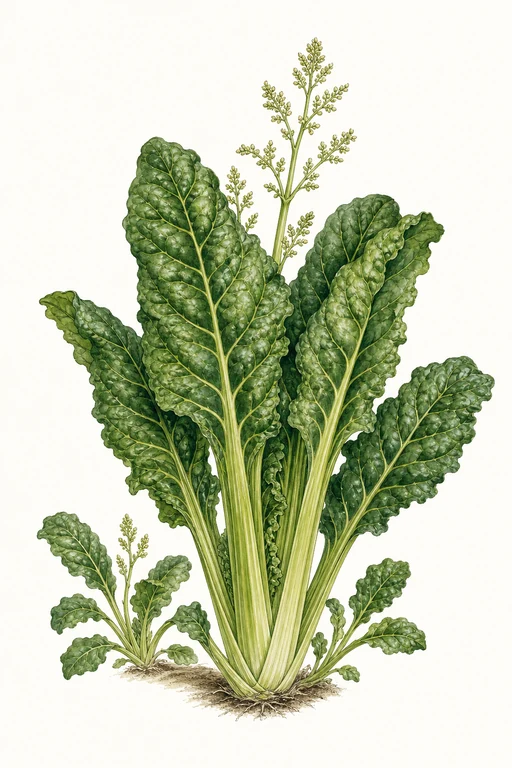
The foliage forms an upright rosette of deep green, crinkled blades with crisp, light-green stems that hold their color beautifully through the season. Grow it for fresh salads and vibrant sautés, or for silky sauces and quick pickling where its bright greens shine.
Light: Full SunMaturity: 50 DaysHabit: Rosette
Planting schedules and alerts are optimized for Columbus (Zone 6b).
Crop Dates
| Milestone | Date |
|---|---|
| Start Indoors | Mar 28th |
| Last Frost | Apr 25th |
| Transplant / Sow Outdoors | Apr 18th |
| Harvest Begins | Jun 7th |
| Harvest Ends | Oct 16th |
Crop Details
| Trait | Value |
|---|---|
| Days to Maturity | 50 |
| Sun Requirements | Full Sun |
| Growth Habit | Rosette |
| Support Needed | None |
| Planting Depth | Normal |
| Germination Temp (°F) | 70 |
| Min Soil Temp (°F) | 40 |
| Min Night Temp (°F) | 30 |
| Harden Off (days) | 6 |
Culinary Notes

Chef's Note
Green Swiss chard has a crisp, mineral edge that shows up in the first bite, but it mellows quickly when it hits hot fat or a bright squeeze of lemon. Use the leaves for speed—high heat, short time—so it stays green and springy instead of collapsing into dull spinach mush.

Best Uses
- quick sautéing with a hot sear to keep leaves vibrant and stems snappy
- blanch-and-chill for chopping into bright green salads
- silky purée in warm sauces where the bitterness rounds out
- fast pickling of stems and ribs for a crunchy, briny bite

Flavor Profile

Kitchen Pairings
Frequently Asked Questions
What pest or disease is most likely on Swiss chard (Beta vulgaris var. cicla), and how can I control it?
How often should I water green Swiss chard during peak growth?
How do I tell when green Swiss chard is ready to harvest?
Sowing Tips

Transplant Conditions
Wait until soil reaches 40°F and nights stay above 30°F before moving outdoors. Harden off for 6 days first.
Expert Note

For the sweetest leaves, keep plants growing steadily and harvest frequently as outer leaves once they’re large.