
Grenadin Mix
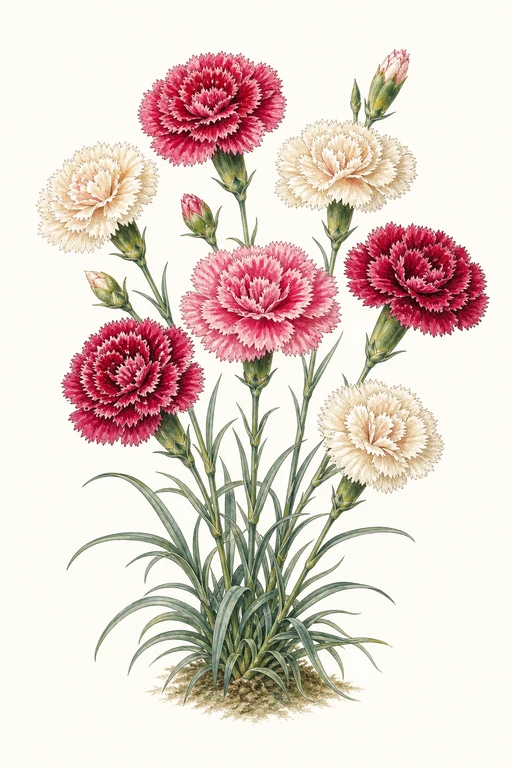
Fragrant, ruffled blooms in the Grenadin Mix arrive like a small bouquet of color—silken petals layered in warm rose, crimson, and creamy white, each floret edged with a delicate, celebratory frill.
Expect a sturdy, upright habit with flowers that hold their shape as they mature, offering a velvety texture and a sweet, spicy perfume that lingers in the garden. Ideal for beds, borders, and long-lasting cut-flower displays, this mix brings classic carnation charm with a richly varied palette from one planting.
Light: Full SunMaturity: 120 DaysHabit: Clumping
Planting schedules and alerts are optimized for Columbus (Zone 6b).
Crop Dates
| Milestone | Date |
|---|---|
| Start Indoors | Mar 14th |
| Last Frost | Apr 25th |
| Transplant / Sow Outdoors | May 9th |
| Harvest Begins | Sep 6th |
| Harvest Ends | Oct 16th |
Crop Details
| Trait | Value |
|---|---|
| Days to Maturity | 120 |
| Sun Requirements | Full Sun |
| Growth Habit | Clumping |
| Support Needed | None |
| Planting Depth | Normal |
| Germination Temp (°F) | 60 |
| Min Soil Temp (°F) | 45 |
| Min Night Temp (°F) | 40 |
| Harden Off (days) | 7 |
Culinary Notes

Chef's Note
Grenadin-style carnations eat like a floral candy—silky petals with a clove-warm, sweet fragrance that blooms best at cool temperatures or in short contact with sugar. Use the petals sparingly and finish with them off-heat so the perfume stays bright and doesn’t turn bitter.

Best Uses
- ice-cold petal garnish for salads and chilled drinks
- quick-macerated petals for syrups and simple desserts
- finishing accent on yogurt, panna cotta, and custards
- tossed into shortbread dough or sprinkled over warm cakes for a perfumed top note

Flavor Profile

Kitchen Pairings
Frequently Asked Questions
What’s the most common disease to watch for on Dianthus caryophyllus (carnation) and how do I prevent/treat it?
How often should I water Dianthus caryophyllus during the main growing phase?
How can I tell when Dianthus caryophyllus (carnation) from a Grenadin Mix is ready to harvest?
Sowing Tips

Transplant Conditions
Wait until soil reaches 45°F and nights stay above 40°F before moving outdoors. Harden off for 7 days first.
Expert Note

For compact borders, pinch spent blooms and keep soil evenly moist but well-drained to reduce rot and encourage repeat flowering.