
Grokowanka
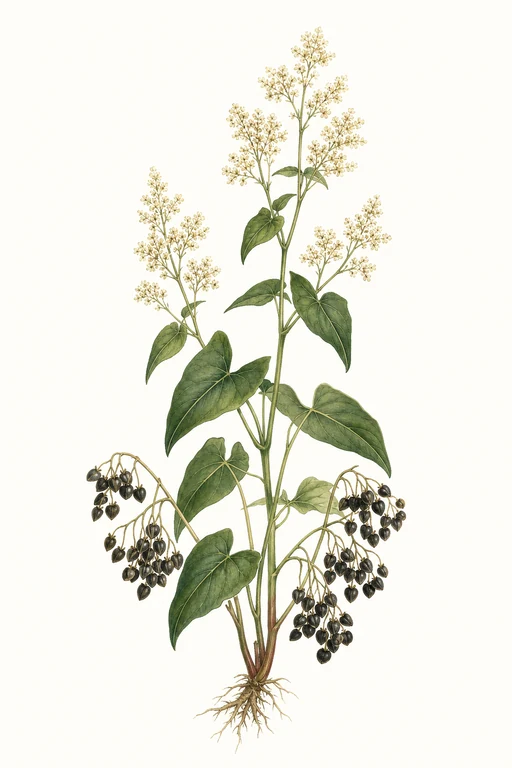
Aromatic, honey-sweet buckwheat blossoms rise on sturdy stems, carrying a gentle, nutty fragrance that lingers in the garden air.
Grokowanka forms a dense, upright stand with slender leaves and a profusion of creamy-white flowers, then develops plump, dark seed that’s prized for its rich, earthy character and satisfying bite. Grow Grokowanka for a dependable 75-day season and a harvest that shines in hearty grain-style preparations and comforting blends, from rustic bowls to robust sauces and pickling brines.
Light: Full SunMaturity: 75 DaysHabit: Upright
Planting schedules and alerts are optimized for Columbus (Zone 6b).
Crop Dates
| Milestone | Date |
|---|---|
| Start Indoors | Direct Sow |
| Last Frost | Apr 25th |
| Transplant / Sow Outdoors | Apr 25th |
| Harvest Begins | Jul 9th |
| Harvest Ends | Oct 16th |
Crop Details
| Trait | Value |
|---|---|
| Days to Maturity | 75 |
| Sun Requirements | Full Sun |
| Growth Habit | Upright |
| Support Needed | None |
| Planting Depth | Normal |
| Germination Temp (°F) | 55 |
| Min Soil Temp (°F) | 60 |
| Min Night Temp (°F) | 40 |
| Harden Off (days) | Not Required |
Culinary Notes

Chef's Note
Grokowanka buckwheat leans aromatic and honey-sweet rather than flatly bitter, so it reads especially well when you toast or roast it first. The grain’s satisfying chew holds up in hearty bowls and blended preparations without turning mushy.

Best Uses
- dry-roast and grind into a fragrant flour for hearty buckwheat pancakes and crepes
- cook into groats for warm bowls where each grain stays distinct and toothsome
- use in rustic grain blends with roasted mushrooms and thyme
- brew into a tangy, lightly nutty fermentation for brined grain mixes

Flavor Profile

Kitchen Pairings
Frequently Asked Questions
What pests or diseases commonly affect Fagopyrum esculentum (buckwheat) and how can I manage them?
How often should I water Fagopyrum esculentum during its main growing phase?
How do I know when Fagopyrum esculentum is ready to harvest?
Sowing Tips

Transplant Conditions
Wait until soil reaches 60°F and nights stay above 40°F before moving outdoors.
Expert Note

Sow when soils are warming and keep moisture even early—buckwheat matures quickly and benefits from an even, weed-free start.