
Grumolo
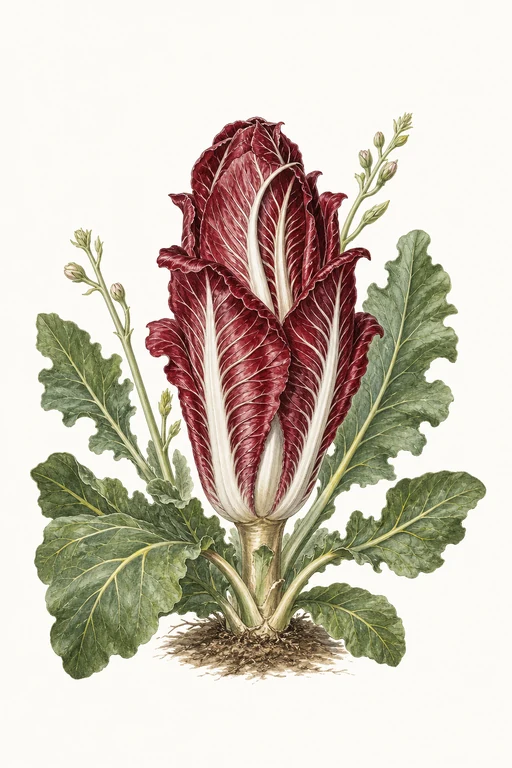
Sink your fork into Grumolo’s crisp, cool-hearted crunch—its leaves form tight, upright heads with a vivid, wine-kissed red over pale, creamy ribs.
The flavor is pleasantly bittersweet and clean, with a tender snap that holds beautifully from garden to table. Ideal for fresh salads and quick roasting, Grumolo also shines in vibrant braises and tangy sauces where its distinctive radicchio character can take center stage.
Light: Full SunMaturity: 45 DaysHabit: Rosette
Planting schedules and alerts are optimized for Columbus (Zone 6b).
Crop Dates
| Milestone | Date |
|---|---|
| Start Indoors | Direct Sow |
| Last Frost | Apr 25th |
| Transplant / Sow Outdoors | Apr 25th |
| Harvest Begins | Jun 9th |
| Harvest Ends | Oct 16th |
Crop Details
| Trait | Value |
|---|---|
| Days to Maturity | 45 |
| Sun Requirements | Full Sun |
| Growth Habit | Rosette |
| Support Needed | None |
| Planting Depth | Normal |
| Germination Temp (°F) | 40 |
| Min Soil Temp (°F) | 40 |
| Min Night Temp (°F) | 30 |
| Harden Off (days) | Not Required |
Culinary Notes

Chef's Note
Grumolo’s upright heads give you a tight, fork-holding crunch, and its clean bittersweetness needs acidity and salt to feel bright instead of harsh. Use it in quick heat—roast or char—so the ribs soften just enough to coat in fat and vinegar without collapsing.

Best Uses
- shaved radicchio salad with a sharp vinaigrette and crunchy additions
- quick roasting or broiling to intensify caramel edges without turning mushy
- braises where it steams down but keeps structure—especially in tangy, tomato-forward sauces
- charred wedges with hot dressing to cling to the rib structure

Flavor Profile

Kitchen Pairings
Frequently Asked Questions
What pest or disease commonly affects Cichorium intybus (Grumolo), and how can I control it?
How often should I water Grumolo (Cichorium intybus) during its main growth phase?
How do I tell when Grumolo (Cichorium intybus) is ready to harvest?
Sowing Tips

Transplant Conditions
Wait until soil reaches 40°F and nights stay above 30°F before moving outdoors.
Expert Note

For the earliest spring rosettes, sow in late winter/early spring as soon as the ground can be worked and keep soil evenly moist for fast establishment.