
Guernsey Half Long
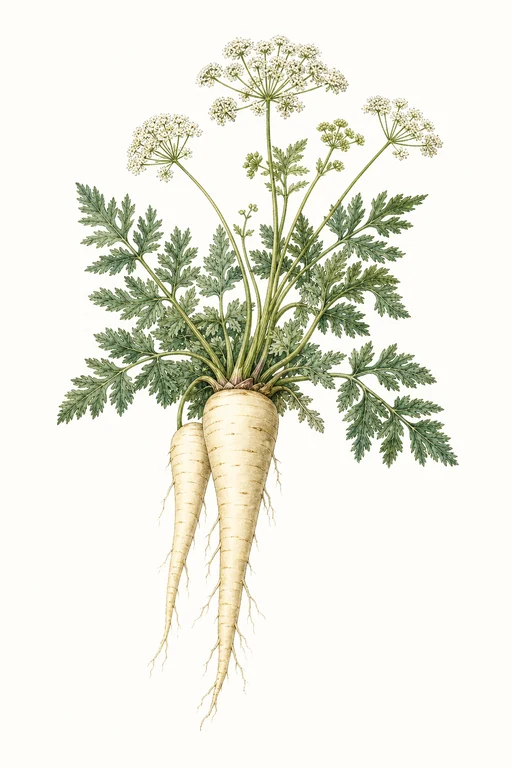
Sweet, nutty fragrance rises from the soil as Guernsey Half Long reaches maturity—its roots develop a smooth, creamy-white core with a gentle taper and a tender, fine-grained bite.
The texture stays pleasantly crisp and uniform, making it a standout for roasting, pan-skillets, and velvety sauces, while its classic shape is equally well suited for pickling-style preparations. For gardeners who love dependable performance, Guernsey Half Long offers a long, elegant harvest window and a richly satisfying flavor in every batch.
Light: Full SunMaturity: 120 DaysHabit: Taproot
Crop Dates : 1b
| Milestone | Date |
|---|---|
| Last Frost | Jun 1st |
| Growing Approach | Protected Environment Only |
Crop Details
| Trait | Value |
|---|---|
| Days to Maturity | 120 |
| Sun Requirements | Full Sun |
| Growth Habit | Taproot |
| Support Needed | None |
| Planting Depth | Normal |
| Germination Temp (°F) | 70 |
| Min Soil Temp (°F) | 45 |
| Min Night Temp (°F) | 28 |
| Harden Off (days) | Not Required |
Culinary Notes

Chef's Note
Guernsey Half Long’s fine-grained, uniform flesh roasts into a creamy center without going woody, so it’s built for high-heat caramelization and smooth purée work. Its naturally sweet, nutty profile plays especially well with butter and herb heat—then honey or pepper to sharpen the finish.

Best Uses
- hot-oven roasting until caramelized at the edges
- butter-pan skillet glazing for a candied exterior
- velvet purée or soup base (blend smooth, not stringy)
- quick pickling-style slices for a bright, snappy crunch

Flavor Profile

Frequently Asked Questions
What pest or disease most commonly affects Pastinaca sativa (parsnip), and what should I do?
How often should I water Pastinaca sativa during the main growing phase, and what soil moisture level do they need?
How can I tell when guernsey half long parsnips (Pastinaca sativa) are ready to harvest?
Sowing Tips

Transplant Conditions
Wait until soil reaches 45°F and nights stay above 28°F before moving outdoors.
Expert Note

Sow thinly, keep the bed consistently moist until established, and give parsnips time—flavor often improves after a light frost.