
Hardy Marjoram
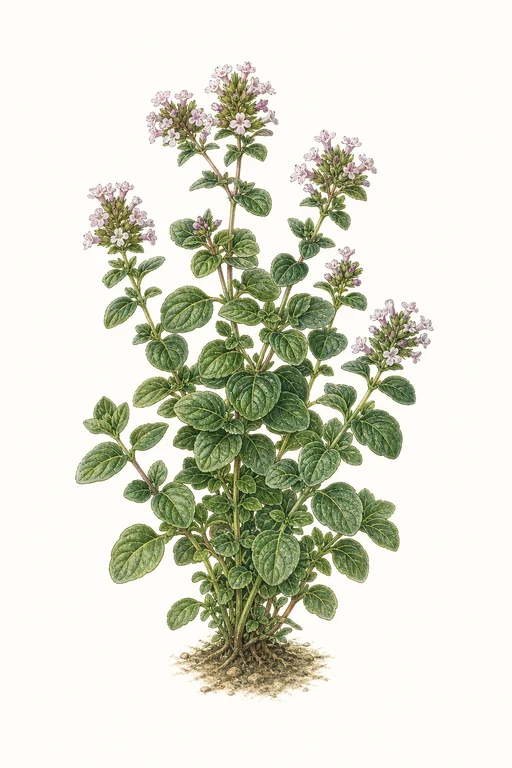
Fragrant at first touch, Hardy Marjoram unfurls a rich, resinous aroma with sweet, piney warmth and a softly peppered finish.
Its small, velvety leaves form tidy, upright clumps that hold their character through cool weather—ideal for gardeners who want dependable flavor from spring into fall. Grow it for bold seasoning in dried blends and for finishing sauces, soups, and savory roasts, or for fresh snipping to brighten everyday dishes with its unmistakable marjoram perfume.
Light: Full SunMaturity: 60 DaysHabit: Upright
Crop Dates : 8a
| Milestone | Date |
|---|---|
| Start Indoors | Mar 4th |
| Last Frost | Apr 1st |
| Transplant / Sow Outdoors | May 27th |
| Harvest Begins | Jul 26th |
| Harvest Ends | Nov 5th |
Crop Details
| Trait | Value |
|---|---|
| Days to Maturity | 60 |
| Sun Requirements | Full Sun |
| Growth Habit | Upright |
| Support Needed | None |
| Planting Depth | Surface |
| Germination Temp (°F) | 70 |
| Min Soil Temp (°F) | 50 |
| Min Night Temp (°F) | 35 |
| Harden Off (days) | 7 |
Culinary Notes

Chef's Note
Hardy Marjoram hits fast on the nose—sweet pine resin with a gentle pepper snap—so use it either early for perfume infusion or at the end for fragrance that doesn’t go hollow. Because the leaves are velvety and aromatic, it holds up especially well in dried seasoning and in long, slow braises.

Best Uses
- drying and massing into dried seasoning blends
- finishing soups and stews where it stays fragrant instead of turning sharp
- stirring into pan sauces and braise liquids for a warm, oregano-adjacent lift
- folding into roasted root veg, beans, and savory stuffing

Flavor Profile

Kitchen Pairings
Frequently Asked Questions
What pests or diseases commonly affect Origanum × majoricum (hardy marjoram), and how can I manage them?
How often should I water Hardy Marjoram during the main growing phase?
How do I know when Hardy Marjoram is ready to harvest?
Sowing Tips

Transplant Conditions
Wait until soil reaches 50°F and nights stay above 35°F before moving outdoors. Harden off for 7 days first.
Expert Note

Start indoors in light, keep evenly moist until established, and transplant into warm, well-drained soil for a bushy, long-lived plant.