
Hercules Club
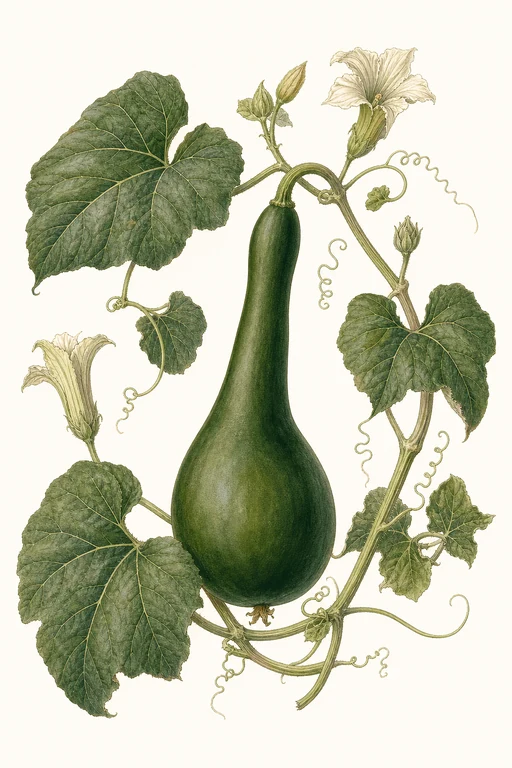
Sink your senses into Hercules Club’s lush, tender flesh and its quietly sweet, garden-fresh aroma—an impressive bottle gourd with a satisfying, crisp-yet-silky bite.
At maturity, the fruit forms a long, clubbed silhouette with a smooth, satiny skin that feels substantial in the hand and shines in the patch. Grow it for hearty, versatile uses in roasts, fresh preparations, and savory sauces, where its mild sweetness and refined texture shine.
Light: Full SunMaturity: 90 DaysHabit: Vine
Planting schedules and alerts are optimized for Columbus (Zone 6b).
Crop Dates
| Milestone | Date |
|---|---|
| Start Indoors | Direct Sow |
| Last Frost | Apr 25th |
| Transplant / Sow Outdoors | May 9th |
| Harvest Begins | Aug 7th |
| Harvest Ends | Oct 16th |
Crop Details
| Trait | Value |
|---|---|
| Days to Maturity | 90 |
| Sun Requirements | Full Sun |
| Growth Habit | Vine |
| Support Needed | Trellis |
| Planting Depth | Normal |
| Germination Temp (°F) | 75 |
| Min Soil Temp (°F) | 70 |
| Min Night Temp (°F) | 55 |
| Harden Off (days) | 10 |
Culinary Notes

Chef's Note
Hercules Club bottle gourd brings that rare combo of mild sweetness and a crisp-yet-silky mouthfeel, so it doesn’t need heavy seasoning to taste complete. Use it hot—stir-fried or roasted—to let the edges brown, or shave it raw/pickled for that clean crunch that cuts through spice and richness.

Best Uses
- quick stir-fries where it stays snappy rather than collapsing
- roasting to caramelize edges while the center turns silky
- savory soups and broths (stays pleasant, not grainy)
- fresh, thin-sliced salads or quick pickles for crunch

Flavor Profile

Frequently Asked Questions
What are common pests or diseases for Lagenaria siceraria (bottle gourd) and how do I control them?
How often should I water Lagenaria siceraria during the main growing phase?
How can I tell when Lagenaria siceraria (Hercules Club) is ready to harvest?
Sowing Tips

Transplant Conditions
Wait until soil reaches 70°F and nights stay above 55°F before moving outdoors. Harden off for 10 days first.

Direct Sow Preferred
Sensitive roots — does not transplant well. If starting indoors, use biodegradable pots and disturb roots as little as possible when moving outdoors.
Expert Note

Start bottle gourds only if needed for a short season, and keep root disturbance minimal—plants are heat-hungry once soils warm.