
Holy Red
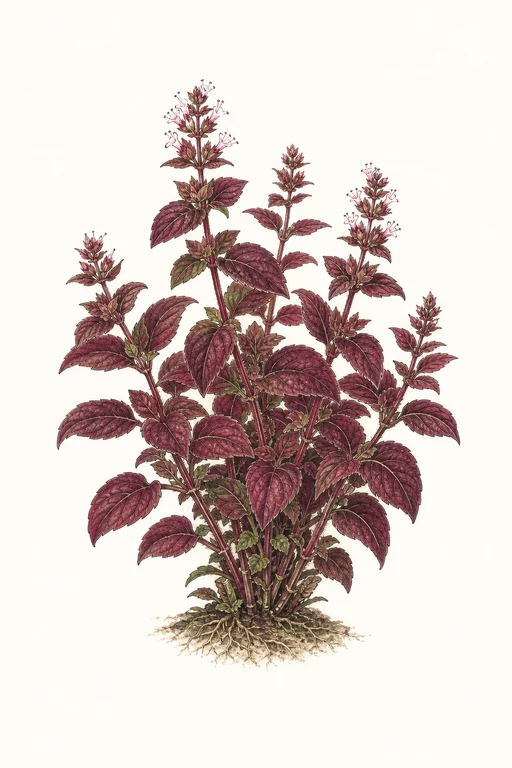
Fragrant and richly aromatic, Holy Red Holy Basil unfurls with a deep, wine-red glow that perfumes the garden from morning to dusk.
The leaves are tender yet substantial, with a velvety, slightly serrated texture and a sweet-basil backbone lifted by a gentle, peppery note. Grow it for fresh bouquets of flavor, vibrant dried herb bundles, and standout infusions and sauces where its bold red character shines.
Light: Full SunMaturity: 70 DaysHabit: Upright
Planting schedules and alerts are optimized for Columbus (Zone 6b).
Crop Dates
| Milestone | Date |
|---|---|
| Start Indoors | Mar 14th |
| Last Frost | Apr 25th |
| Transplant / Sow Outdoors | Jun 6th |
| Harvest Begins | Aug 15th |
| Harvest Ends | Oct 16th |
Crop Details
| Trait | Value |
|---|---|
| Days to Maturity | 70 |
| Sun Requirements | Full Sun |
| Growth Habit | Upright |
| Support Needed | None |
| Planting Depth | Normal |
| Germination Temp (°F) | 75 |
| Min Soil Temp (°F) | 60 |
| Min Night Temp (°F) | 50 |
| Harden Off (days) | 10 |
Culinary Notes

Chef's Note
Holy Red Holy Basil carries a darker, pepper-forward aroma with a sweet-basil core, so it reads beautifully when used fresh or added late. Use it aggressively in hot infusions or quick sauces, but don’t cook it long—its velvety leaf character and red perfume vanish fast under heat.

Best Uses
- torn-leaf Thai-style herb finishing (add at the end so it doesn’t fade)
- bruise-and-steep oils for a red-tinted basil oil to dress noodles or grilled chicken
- sweet-tinged, peppery infusions (hot tea or syrup)
- pestolike sauces where you want an anise-clove edge under basil sweetness

Flavor Profile

Frequently Asked Questions
What’s the most common problem to watch for when growing Ocimum tenuiflorum (Holy Red) and how do I treat it?
How often should I water Holy Red during the main growing phase?
How can I tell when Holy Red (Ocimum tenuiflorum) is ready to harvest?
Sowing Tips

Transplant Conditions
Wait until soil reaches 60°F and nights stay above 50°F before moving outdoors. Harden off for 10 days first.
Expert Note

Start seedlings indoors warm and transplant only when nights are reliably above ~50°F to prevent stunting in purple Holy Basil.