
Homestead 24
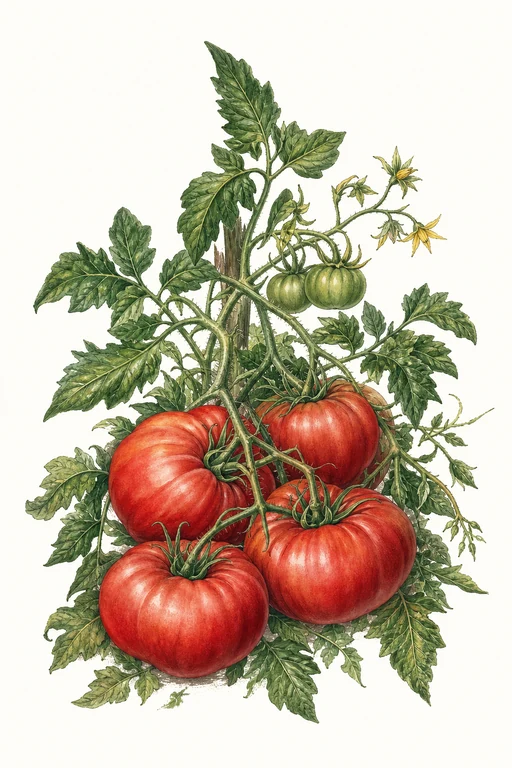
Sink your senses into Homestead 24’s rich, beefsteak abundance—an inviting, sweet-tart fragrance with a juicy, velvety interior that feels substantial in the hand.
Fruits ripen to a warm, classic red with a broad, slightly flattened silhouette and a tender, meaty texture prized for bold slices and hearty, garden-fresh flavor. Grow Homestead 24 for standout performance in the home plot, where its generous size shines in fresh salads, vibrant sauces, and thick, satisfying roasted preparations.
Light: Full SunMaturity: 85 DaysHabit: Indeterminate
Crop Dates : 2b
| Milestone | Date |
|---|---|
| Start Indoors | Mar 27th |
| Last Frost | May 15th |
| Transplant / Sow Outdoors | Jul 10th |
| Harvest Begins | Oct 3rd |
| Harvest Ends | Aug 25th |
Crop Details
| Trait | Value |
|---|---|
| Days to Maturity | 85 |
| Sun Requirements | Full Sun |
| Growth Habit | Indeterminate |
| Support Needed | Cage |
| Planting Depth | Deep |
| Germination Temp (°F) | 75 |
| Min Soil Temp (°F) | 60 |
| Min Night Temp (°F) | 50 |
| Harden Off (days) | 10 |
Culinary Notes

Chef's Note
Homestead 24 is a true beefsteak—meaty, tender, and juicy enough to taste like summer even without help. It handles heat well for roasting and sauce because it reduces into a velvety spoonful rather than thinning out into watery tracks.

Best Uses
- thick sandwich slices on sturdy bread (no soggy interior)
- quick high-heat roast to concentrate and caramelize the edges
- chunky skillet tomato sauce that coats pasta with a spoonable body
- salad slicing with minimal dressing so the fruit’s juice stays in the bowl

Flavor Profile

Kitchen Pairings
Frequently Asked Questions
Why are my Solanum lycopersicum (tomatoes) developing brown leaf spots or fuzzy growth, and what should I do?
How often should I water Solanum lycopersicum during fruiting to prevent blossom-end rot and splitting?
How can I tell when my Solanum lycopersicum (tomatoes) are ready to harvest?
Sowing Tips

Transplant Conditions
Wait until soil reaches 60°F and nights stay above 50°F before moving outdoors. Harden off for 10 days first.
Expert Note

Start indoors with warmth and transplant only after night temperatures are consistently warm (about 50°F+) to keep beefsteaks from stalling.