
Horapha
Aromatic and luminous, Horapha Thai Basil releases a bright, peppery fragrance with cool anise-citrus notes that rise from every leaf.
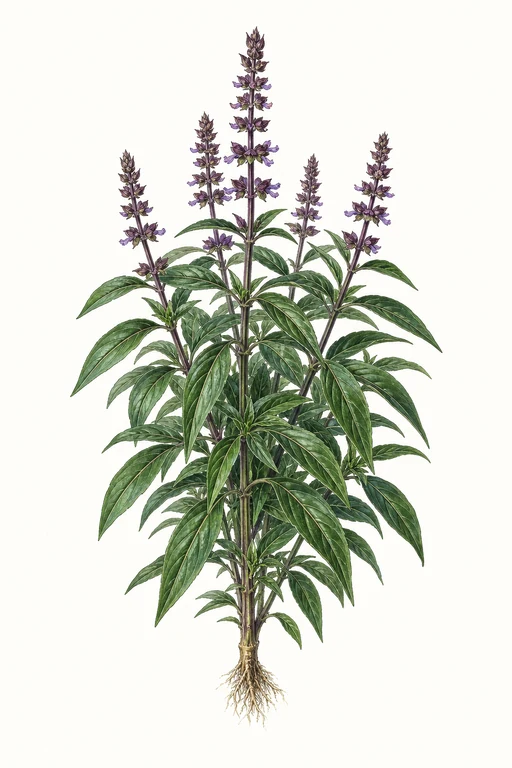
The foliage forms an upright, richly textured mound of narrow, glossy leaves—tender yet substantial—ideal for bold flavor building in fresh applications and fragrant sauces. Grow Horapha for its quick 45-day turnaround and its distinctive, long-lasting garden presence as it matures toward showy purple-tinged blooms.
Light: Full SunMaturity: 45 DaysHabit: Upright
Crop Dates : 2a
| Milestone | Date |
|---|---|
| Start Indoors | May 4th |
| Last Frost | May 25th |
| Transplant / Sow Outdoors | Jul 20th |
| Harvest Begins | Sep 3rd |
| Harvest Ends | Aug 29th |
Crop Details
| Trait | Value |
|---|---|
| Days to Maturity | 45 |
| Sun Requirements | Full Sun |
| Growth Habit | Upright |
| Support Needed | None |
| Planting Depth | Normal |
| Germination Temp (°F) | 70 |
| Min Soil Temp (°F) | 60 |
| Min Night Temp (°F) | 50 |
| Harden Off (days) | 10 |
Culinary Notes

Chef's Note
Horapha Thai basil doesn’t just taste green—it smells like anise and citrus first, then hits with a peppery, clean bite. It earns its keep in high-heat, last-minute cooking and spoon-on sauces where its aroma can stay sharp instead of going dull.

Best Uses
- wok-fry finish for fast sautéed aromatics (add at the last 30–60 seconds)
- Thai-style herb-heavy sauces and dressings (blend briefly, use immediately)
- chopped leaf topping for rice/noodle bowls—adds fragrance without turning bitter

Flavor Profile

Frequently Asked Questions
What’s a common disease problem for Thai basil (Ocimum basilicum) like Horapha, and how can I prevent or fix it?
How often should I water Ocimum basilicum during the main growing phase?
How do I tell when Horapha Thai basil (Ocimum basilicum) is ready to harvest?
Sowing Tips

Transplant Conditions
Wait until soil reaches 60°F and nights stay above 50°F before moving outdoors. Harden off for 10 days first.
Expert Note

For Thai basil, wait until nights are consistently warm and give it full sun—cool weather slows growth and reduces leaf quality.