
Improved Dwarf Siberian
Feel the crisp, cool snap of Improved Dwarf Siberian kale—tender yet substantial leaves with a clean, sweet-green flavor that deepens beautifully as the weather turns.
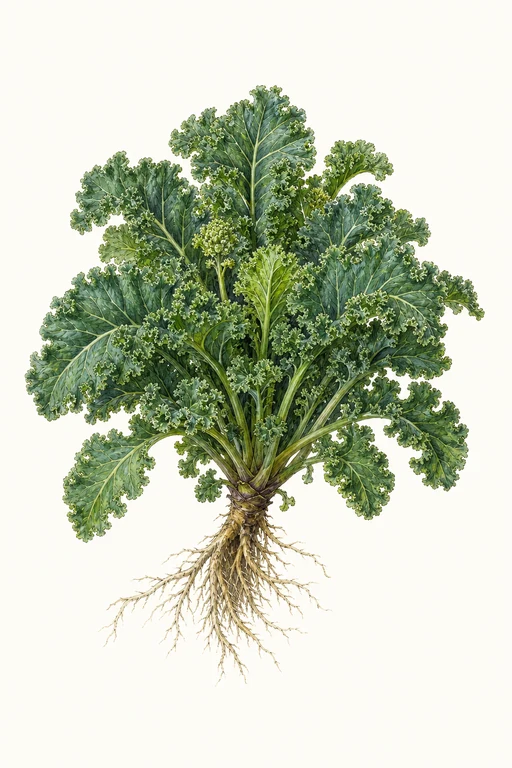
Compact plants form a dense rosette of finely textured, ruffled foliage, making it easy to grow and satisfying to harvest repeatedly. Ideal for hearty bunches in fresh salads, vibrant sautés, and robust winter-style dishes, this dependable variety shines when you want flavor that stays bold and leaves that hold their character.
Light: Full SunMaturity: 55 DaysHabit: Rosette
Planting schedules and alerts are optimized for Columbus (Zone 6b).
Crop Dates
| Milestone | Date |
|---|---|
| Start Indoors | Mar 28th |
| Last Frost | Apr 25th |
| Transplant / Sow Outdoors | Apr 25th |
| Harvest Begins | Jun 19th |
| Harvest Ends | Oct 16th |
Crop Details
| Trait | Value |
|---|---|
| Days to Maturity | 55 |
| Sun Requirements | Full Sun |
| Growth Habit | Rosette |
| Support Needed | None |
| Planting Depth | Normal |
| Germination Temp (°F) | 45 |
| Min Soil Temp (°F) | 40 |
| Min Night Temp (°F) | 28 |
| Harden Off (days) | 6 |
Culinary Notes

Chef's Note
Improved Dwarf Siberian kale eats like a well-behaved brassica: sweet-green up front, then a clean peppery bite, and—crucially—its ruffles keep a pleasant chew in heat. It’s the kind of leaf that stays lively in winter-style bowls without collapsing, so you can go from raw crunch to sautéed sheen in the same day.

Best Uses
- quick sauté with a glossy finish—stop before it turns dull and mushy
- massaged raw salad leaves under a bright vinaigrette
- braise or simmer into thick soups and bean stews for a leaf that stays springy
- crispy oven chips—thin ruffle edges that shatter

Flavor Profile

Kitchen Pairings
Frequently Asked Questions
What pest is most likely on Brassica oleracea (dwarf Siberian kale), and how do I control it?
How often should I water Brassica oleracea during the main growing period?
When is Brassica oleracea ready to harvest (Improved Dwarf Siberian kale)?
Sowing Tips

Transplant Conditions
Wait until soil reaches 40°F and nights stay above 28°F before moving outdoors. Harden off for 6 days first.
Expert Note

For best flavor, grow kale during cool weather (avoid prolonged heat) and harvest outer leaves first to keep plants producing.