
Indigo Blue Berries
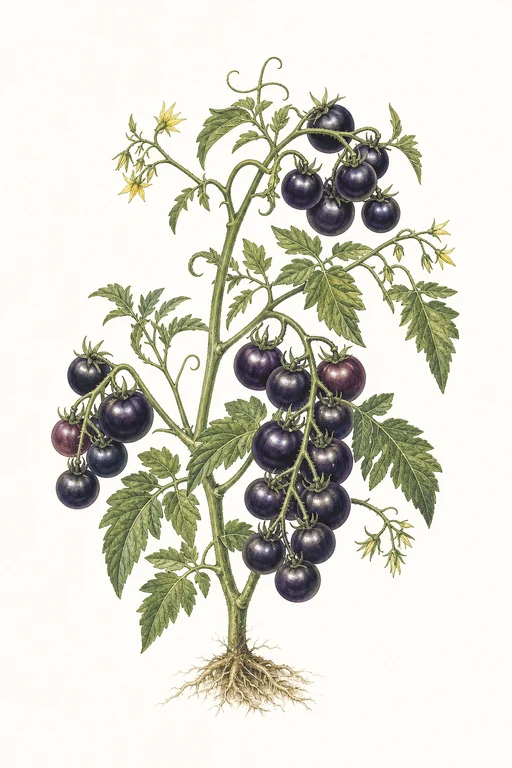
Indigo Blue Berries drape the garden in clusters of inky, near-black fruit that blush into a rich indigo-purple—bursting with a sweet-tangy snap and a juicy, tender bite.
These compact cherry tomatoes ripen in about 60 days, forming tidy, productive trusses with a smooth, glossy skin and a pleasantly balanced flavor that shines in fresh salads, vibrant sauces, and quick pickles.
Light: Full SunMaturity: 60 DaysHabit: Indeterminate
Crop Dates : 8a
| Milestone | Date |
|---|---|
| Start Indoors | Feb 11th |
| Last Frost | Apr 1st |
| Transplant / Sow Outdoors | May 20th |
| Harvest Begins | Jul 19th |
| Harvest Ends | Nov 5th |
Crop Details
| Trait | Value |
|---|---|
| Days to Maturity | 60 |
| Sun Requirements | Full Sun |
| Growth Habit | Indeterminate |
| Support Needed | Stake |
| Planting Depth | Deep |
| Germination Temp (°F) | 75 |
| Min Soil Temp (°F) | 60 |
| Min Night Temp (°F) | 50 |
| Harden Off (days) | 10 |
Culinary Notes

Chef's Note
These Indigo Blue Berries carry a cherry-tomato perkiness—sweet-tangy with a juicy, tender crunch—so they’re best when you keep the heat brief or the dressing light so the skins don’t collapse into the bowl. Their balanced acidity makes them land cleanly in quick pickles and blistered-pan sauces without tasting sharp or flat.

Best Uses
- raw, high-contrast salad pops (little split risk if dressed gently)
- quick pickles for a bright briny tang and crunchy skins
- hot blistering/roasting until just collapsed for jammy sauce
- truss-to-pan sautéing for fast, glossy tomato gloss

Flavor Profile

Kitchen Pairings
Frequently Asked Questions
What pest or disease is most likely on Solanum lycopersicum (tomato-type indigo berries) and how do I treat it at home?
How often should I water Solanum lycopersicum during the main growing phase?
How can I tell when Solanum lycopersicum is ready to harvest?
Sowing Tips

Transplant Conditions
Wait until soil reaches 60°F and nights stay above 50°F before moving outdoors. Harden off for 10 days first.
Expert Note

For best indigo color, grow with full sun and a steady (not excessive) nitrogen level—fruit color deepens with light once plants are established.