
Jalapeño Gigante II
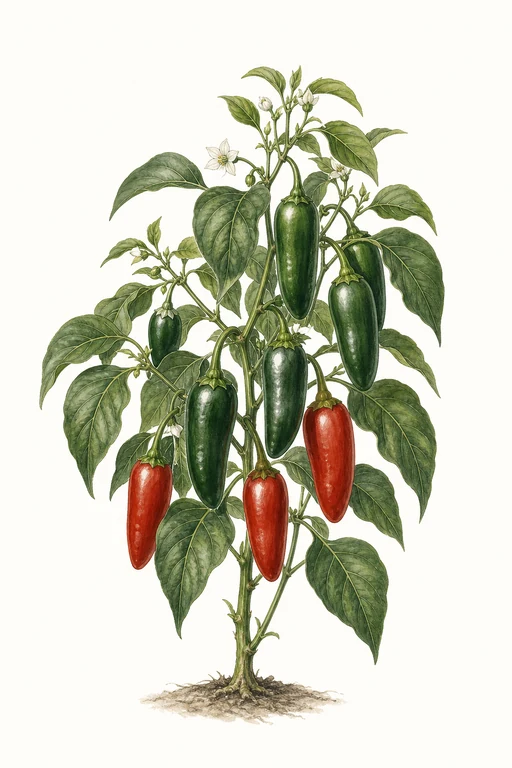
Savory heat with a bright, green snap—Jalapeño Gigante II delivers long, glossy peppers that ripen to a warm red glow.
The flesh is thick and crisp, with a juicy bite and a lively, medium-hot burn that lingers pleasantly. Grow it for bold fresh salsas, roasting for smoky depth, and for sauces and pickles that need real pepper character.
Light: Full SunMaturity: 75 DaysHabit: Upright
Planting schedules and alerts are optimized for Columbus (Zone 6b).
Crop Dates
| Milestone | Date |
|---|---|
| Start Indoors | Mar 7th |
| Last Frost | Apr 25th |
| Transplant / Sow Outdoors | Jun 20th |
| Harvest Begins | Sep 3rd |
| Harvest Ends | Oct 16th |
Crop Details
| Trait | Value |
|---|---|
| Days to Maturity | 75 |
| Sun Requirements | Full Sun |
| Growth Habit | Upright |
| Support Needed | Stake |
| Planting Depth | Normal |
| Germination Temp (°F) | 80 |
| Min Soil Temp (°F) | 60 |
| Min Night Temp (°F) | 50 |
| Harden Off (days) | 10 |
Culinary Notes

Chef's Note
Jalapeño Gigante II is built for the in-between moment: its thick walls give you crunch and pepper juice in a salsa, while it still roasts into smoky sweetness without turning hollow. The heat lands medium and stays pleasant—great for heat-forward sauces and quick pickles where you want peppers to hold their bite.

Best Uses
- fresh salsa where you want a crunchy snap before it weeps
- charred/roasted peppers for blistered, smoky edges that stay peppery
- quick pickling to keep the flesh snappy and the heat lively
- chopped into hot sauces or salsas for body from thick walls

Flavor Profile

Frequently Asked Questions
What pest or disease most commonly affects Capsicum annuum (jalapeño peppers), and how do I treat it at home?
How often should I water jalapeño peppers during the main growing phase (after plants are established)?
How can I tell when my jalapeño peppers (Capsicum annuum) are ready to harvest?
Sowing Tips

Transplant Conditions
Wait until soil reaches 60°F and nights stay above 50°F before moving outdoors. Harden off for 10 days first.
Expert Note

For thick-walled peppers, keep soil evenly moist and avoid cold nights after transplanting (use row cover early if needed).