
Joi Choi
Sink your senses into Joi Choi’s crisp, cool snap—tender leaves with a clean, sweet bite and a faint, pleasant mustard-brightness.
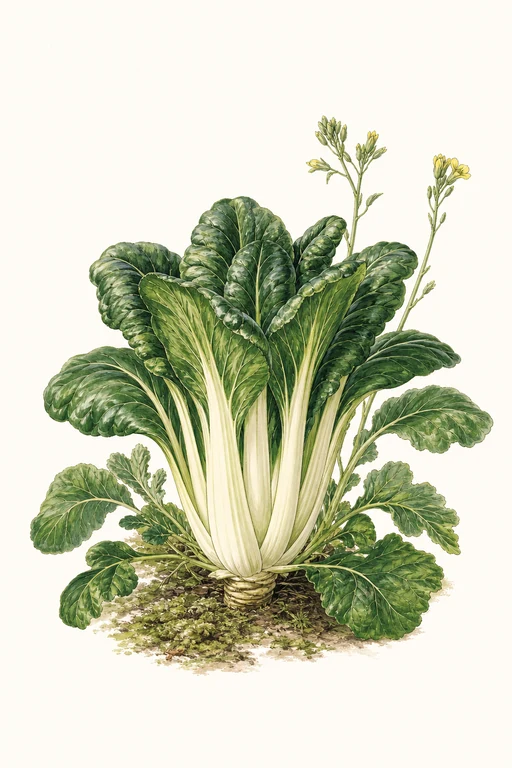
At about 45 days, it forms compact rosettes with thick, juicy white ribs and deep green blades that stay pleasantly succulent rather than turning tough. Grow Joi Choi for fresh salads and quick stir-fry-style skillet favorites, or for bright, leaf-forward sauces and simple pickled accents that showcase its mild character.
Light: Full SunMaturity: 45 DaysHabit: Rosette
Planting schedules and alerts are optimized for Columbus (Zone 6b).
Crop Dates
| Milestone | Date |
|---|---|
| Start Indoors | Direct Sow |
| Last Frost | Apr 25th |
| Transplant / Sow Outdoors | Apr 18th |
| Harvest Begins | Jun 2nd |
| Harvest Ends | Oct 16th |
Crop Details
| Trait | Value |
|---|---|
| Days to Maturity | 45 |
| Sun Requirements | Full Sun |
| Growth Habit | Rosette |
| Support Needed | None |
| Planting Depth | Normal |
| Germination Temp (°F) | 45 |
| Min Soil Temp (°F) | 40 |
| Min Night Temp (°F) | 30 |
| Harden Off (days) | 6 |
Culinary Notes

Chef's Note
This Pak Choi/Joi Choi earns its keep with thick, water-bellied ribs and a leaf that wilts quickly without going woolly. Use it hard and fast—high heat, short time—so the mustard-bright edge pops against soy, ginger, and chili.

Best Uses
- hot quick skillet stir-fry where the ribs stay snappy and the leaves wilt fast
- shredded cold salads that can take a bracing vinaigrette without going limp
- lightly cooked, glossy leaf-forward sauces (steam-blend and finish with fat)
- quick pickles using its ribs for crunchy, pale-green accents

Flavor Profile

Frequently Asked Questions
What pest or disease is most likely on joi choi (Brassica rapa var. chinensis), and how do I control it?
How often should I water joi choi during its main growing phase, and what soil moisture level do I aim for?
How can I tell when joi choi is ready to harvest?
Sowing Tips

Transplant Conditions
Wait until soil reaches 40°F and nights stay above 30°F before moving outdoors. Harden off for 6 days first.
Expert Note

Grow Joi Choi like other fast brassicas—aim for cool weather and keep soil consistently moist to prevent bitterness.