
Jubilee
Sink your spoon into Jubilee’s richly fragrant sweetness—an inviting, rosy-red interior with a crisp, juicy bite that feels cool and luminous in the garden’s heat.
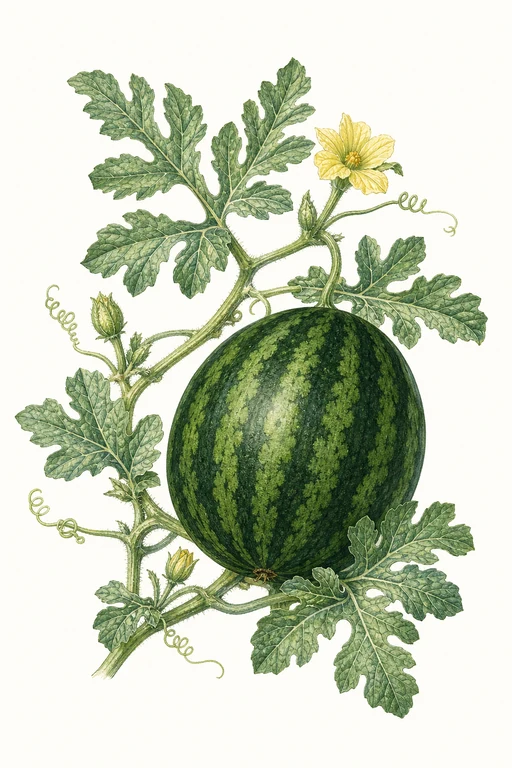
This Picnic Watermelon forms a well-balanced, medium-sized fruit with a smooth, dark-green rind and bold striping that practically begs for a sunny spot in the patch. Jubilee shines for fresh, slice-ready enjoyment and also makes a showstopping centerpiece for gatherings and summer platters.
Light: Full SunMaturity: 88 DaysHabit: Vine
Planting schedules and alerts are optimized for Columbus (Zone 6b).
Crop Dates
| Milestone | Date |
|---|---|
| Start Indoors | Apr 11th |
| Last Frost | Apr 25th |
| Transplant / Sow Outdoors | Apr 25th |
| Harvest Begins | Jul 22nd |
| Harvest Ends | Oct 16th |
Crop Details
| Trait | Value |
|---|---|
| Days to Maturity | 88 |
| Sun Requirements | Full Sun |
| Growth Habit | Vine |
| Support Needed | Trellis |
| Planting Depth | Normal |
| Germination Temp (°F) | 70 |
| Min Soil Temp (°F) | 70 |
| Min Night Temp (°F) | 55 |
| Harden Off (days) | 10 |
Culinary Notes

Chef's Note
Jubilee is built for spoon-and-slice immediacy: crisp, icy juice with sweet aroma that tastes bright even before it hits sugar-high. Serve it cold with sharp citrus and salty dairy—anything mild will get washed out by its cool, water-forward crunch.

Best Uses
- ice-cold picnic slices that stay snappy (not mushy)
- deli-style watermelon wedges with flaky salt and lime
- summer platter centerpiece that holds well for mingling

Flavor Profile

Frequently Asked Questions
What pest is most likely to damage Zea mays (sweet corn), and what can I do early?
How often should I water sweet corn (Zea mays var. saccharata) during the main growing phase?
How do I tell when Jubilee sweet corn (Zea mays var. saccharata) is ready to harvest?
Sowing Tips

Transplant Conditions
Wait until soil reaches 70°F and nights stay above 55°F before moving outdoors. Harden off for 10 days first.

Direct Sow Preferred
Sensitive roots — does not transplant well. If starting indoors, use biodegradable pots and disturb roots as little as possible when moving outdoors.
Expert Note

For best sweetness and large size, grow in full sun on warm soil and avoid root disturbance—keep plants well-watered early, then reduce watering near maturity.