
Kapoor
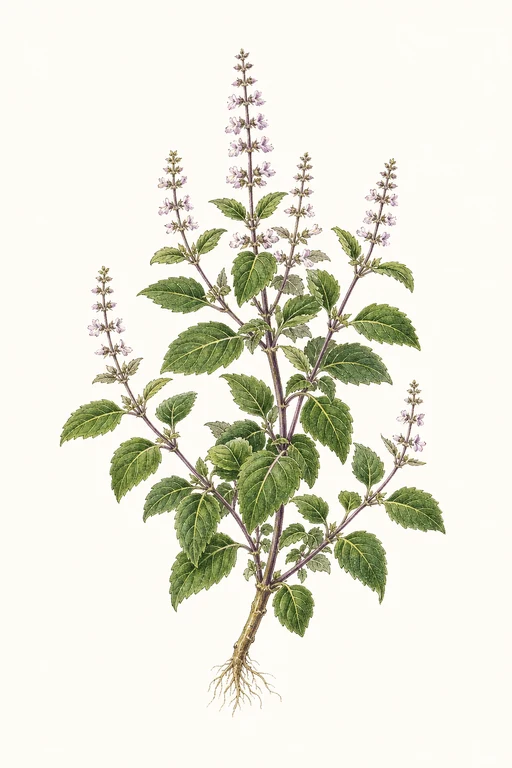
Fragrant, jewel-bright leaves of Kapoor Holy Basil unfurl with a heady, peppery-camphor aroma that lingers in the garden air.
The foliage is tender yet substantial, with a crisp, slightly fuzzy texture and a deeply aromatic flavor profile prized for its refreshing lift. Grow Kapoor for aromatic infusions and flavorful herbal blends, and enjoy its upright, richly leafed habit as it matures in about 70 days.
Light: Full SunMaturity: 70 DaysHabit: Upright
Planting schedules and alerts are optimized for Columbus (Zone 6b).
Crop Dates
| Milestone | Date |
|---|---|
| Start Indoors | Mar 28th |
| Last Frost | Apr 25th |
| Transplant / Sow Outdoors | Jun 20th |
| Harvest Begins | Aug 29th |
| Harvest Ends | Oct 16th |
Crop Details
| Trait | Value |
|---|---|
| Days to Maturity | 70 |
| Sun Requirements | Full Sun |
| Growth Habit | Upright |
| Support Needed | None |
| Planting Depth | Surface |
| Germination Temp (°F) | 70 |
| Min Soil Temp (°F) | 60 |
| Min Night Temp (°F) | 50 |
| Harden Off (days) | 10 |
Culinary Notes

Chef's Note
Kapoor Holy Basil hits like a cool, peppery punch—its camphor-tinged perfume blooms fast, so add it off-heat or at the last minute to keep the leaves crisp and the aroma intact. Use it to sharpen coconut milk, lime, and fatty proteins, where it reads as peppery and fragrant rather than bitter.

Best Uses
- quick steeped infusions for hot or iced drinks
- torn-leaf finishing herb for salads and fruit (used at the end)
- aromatic base for quick stir-fries and noodle bowls
- citrus-forward chutneys and herb pastes where it can cut through fat

Flavor Profile

Frequently Asked Questions
What pest or disease commonly affects Ocimum tenuiflorum (Kapoor/Basil, holy basil) and how can I manage it?
How often should I water Ocimum tenuiflorum during the main growing phase?
How do I know when Ocimum tenuiflorum (Kapoor) is ready to harvest?
Sowing Tips

Transplant Conditions
Wait until soil reaches 60°F and nights stay above 50°F before moving outdoors. Harden off for 10 days first.
Expert Note

Start warm and transplant only when nights are reliably warm—holy basil is very frost-avoidant, but will quickly bush once settled.